Himalayan Art Encounters: From Minerals to Paint to Landscape at Hannah Senesh Community Day School

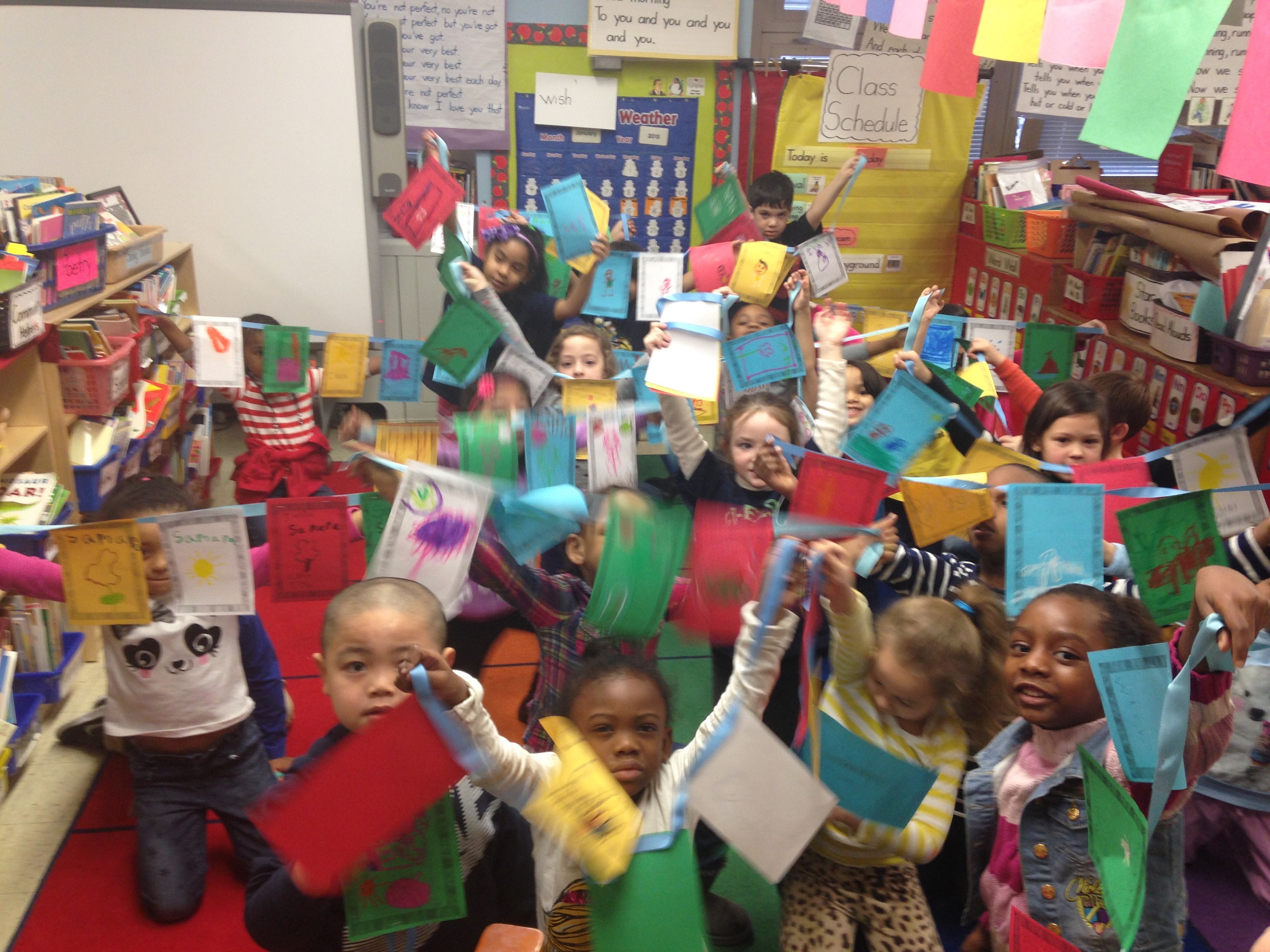
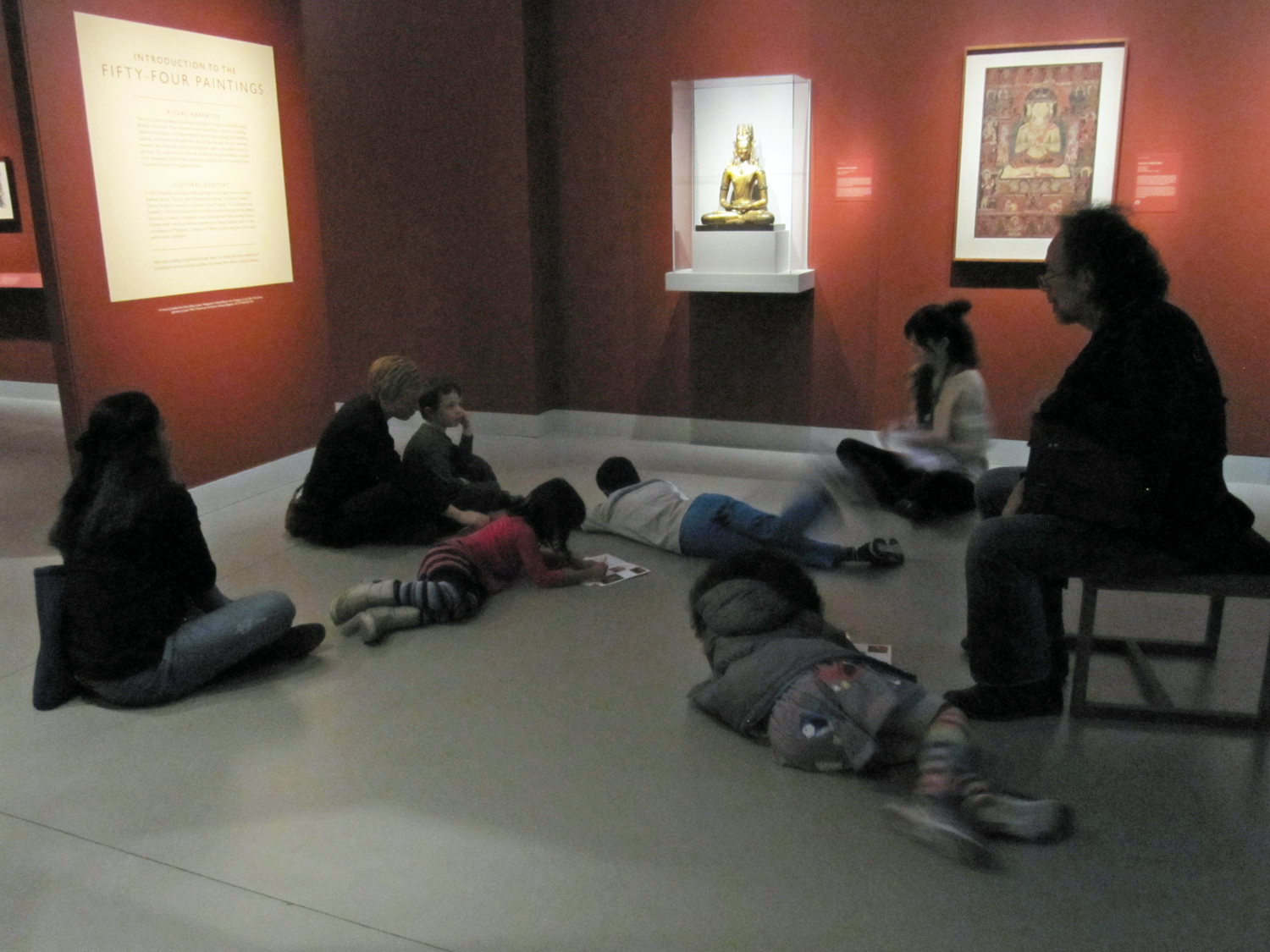
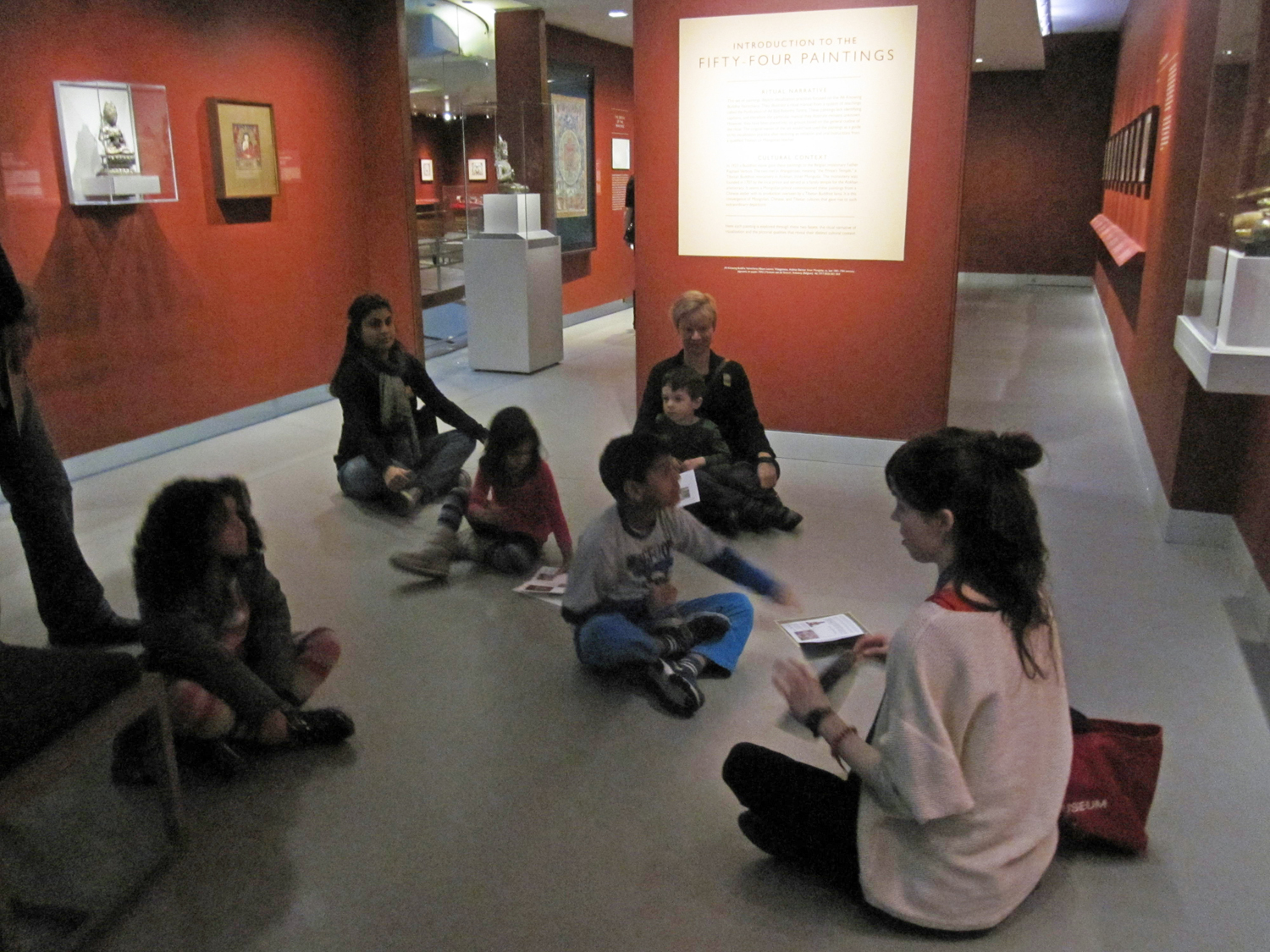
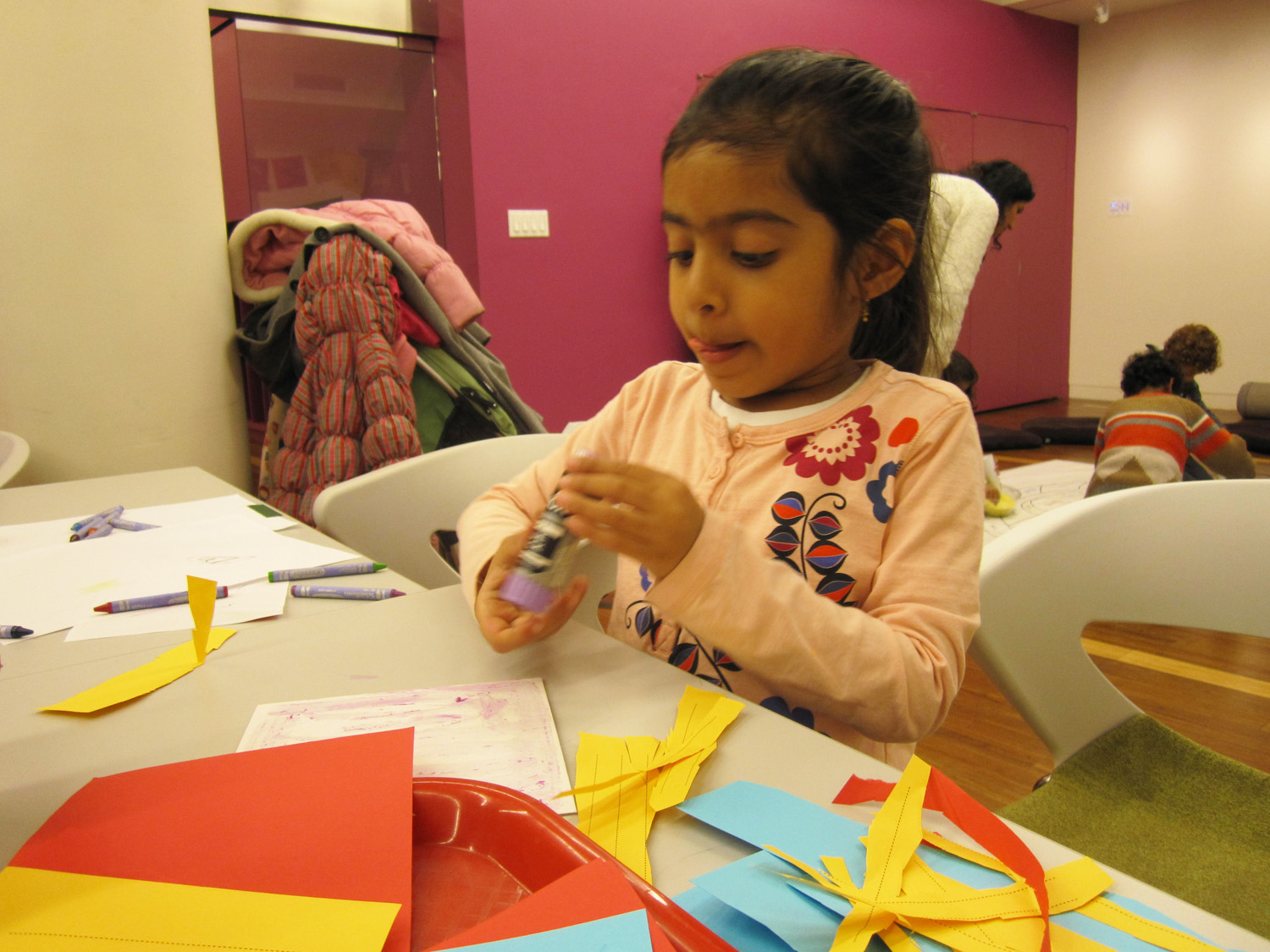
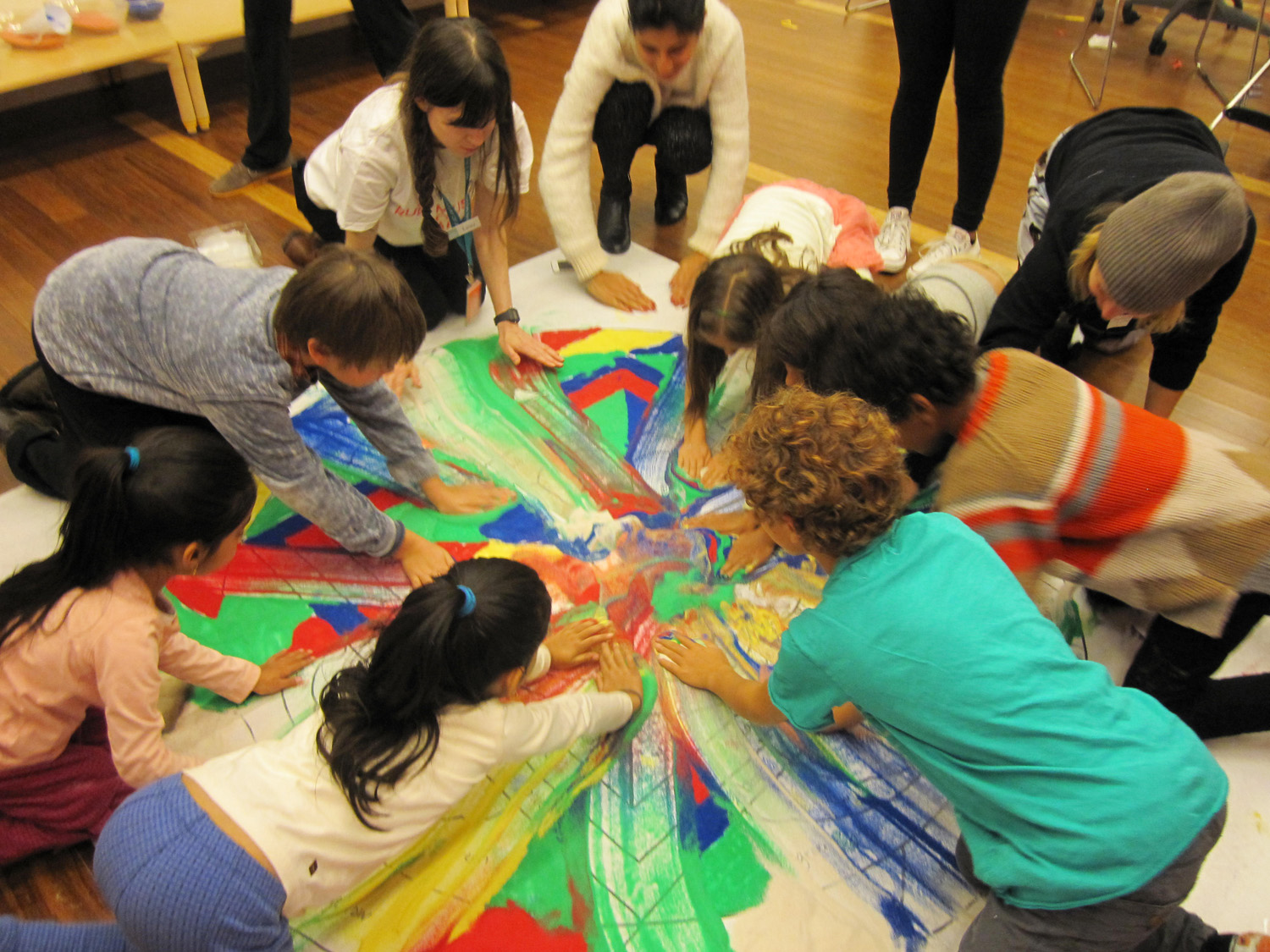
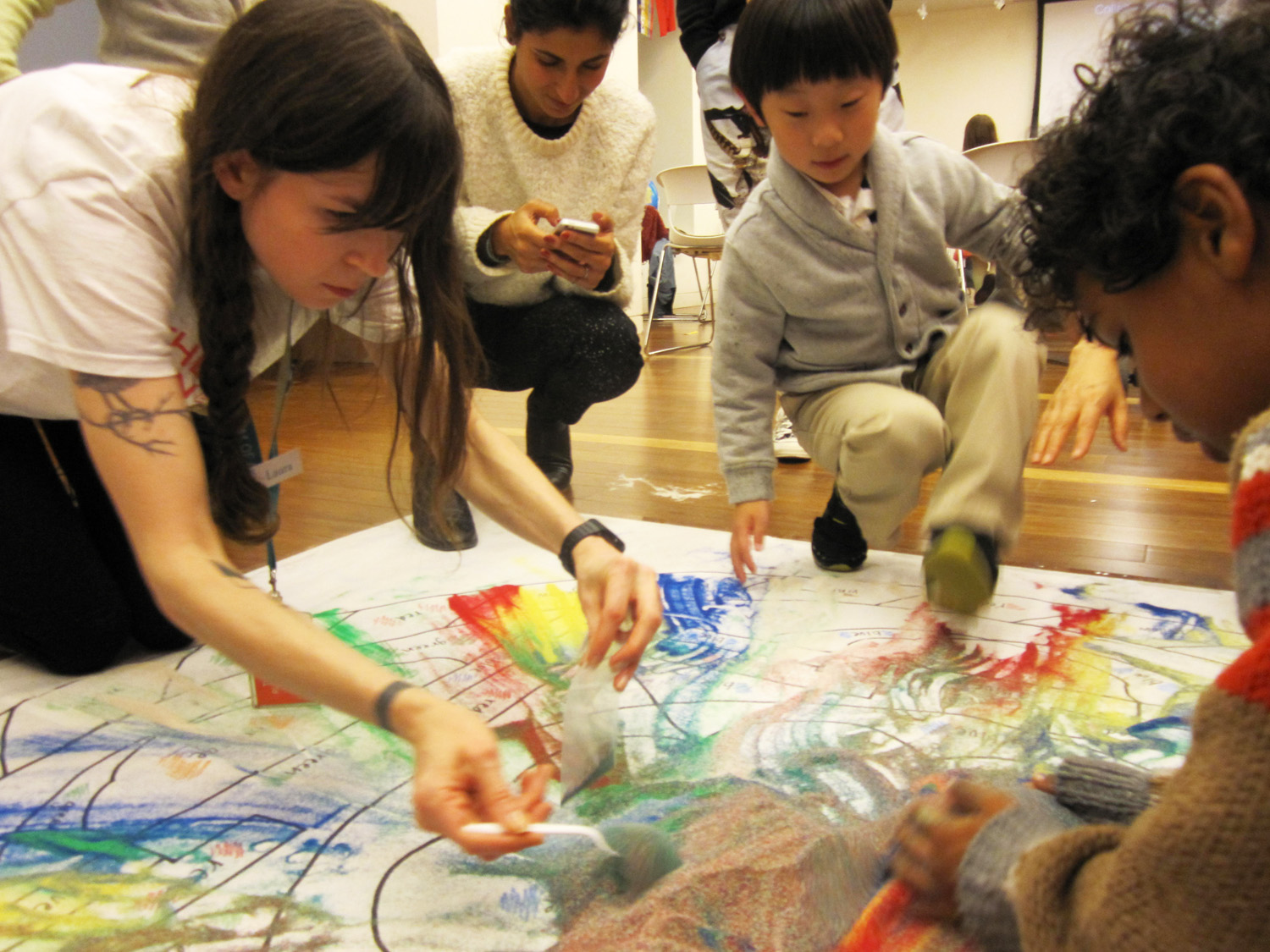
This spring, I continued to work with the 5th grade students at Hannah Senesh Community Day School as a part of their unit studying China as part of a 3-part Himalayan Art Encounter. In the fall, I worked with these students when they were studying India (http://education.rma2.org/himalayan-art-encounter-with-hannah-senesh-community-day-school) and was excited to work with them again.

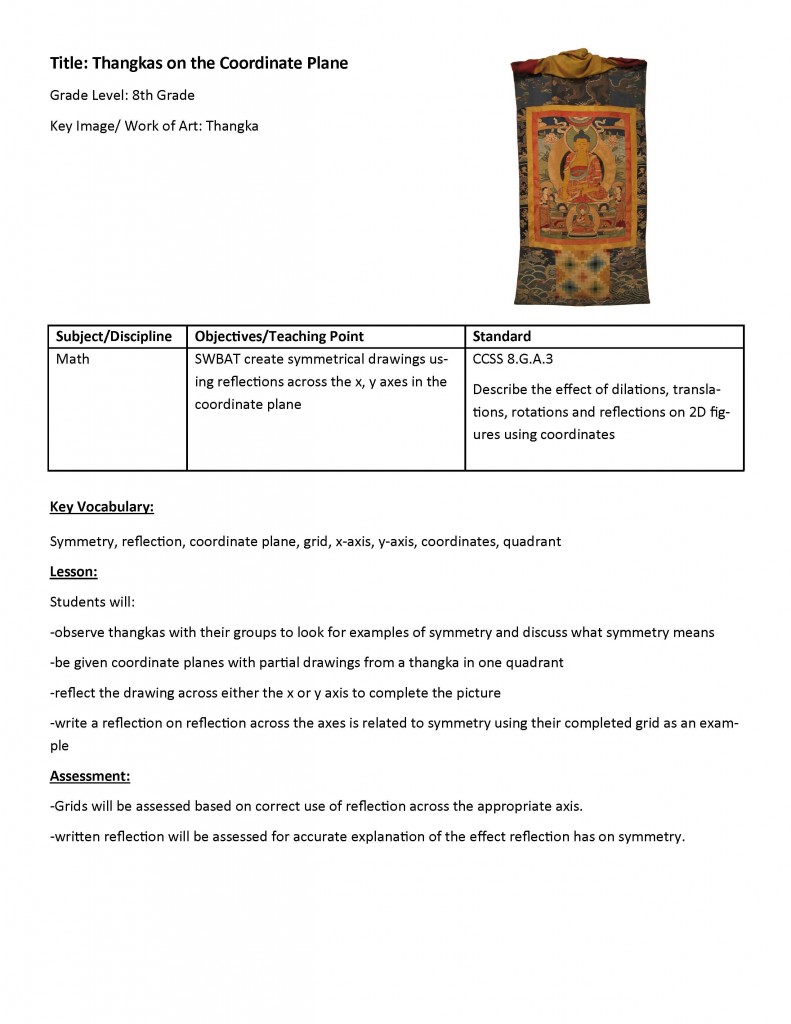
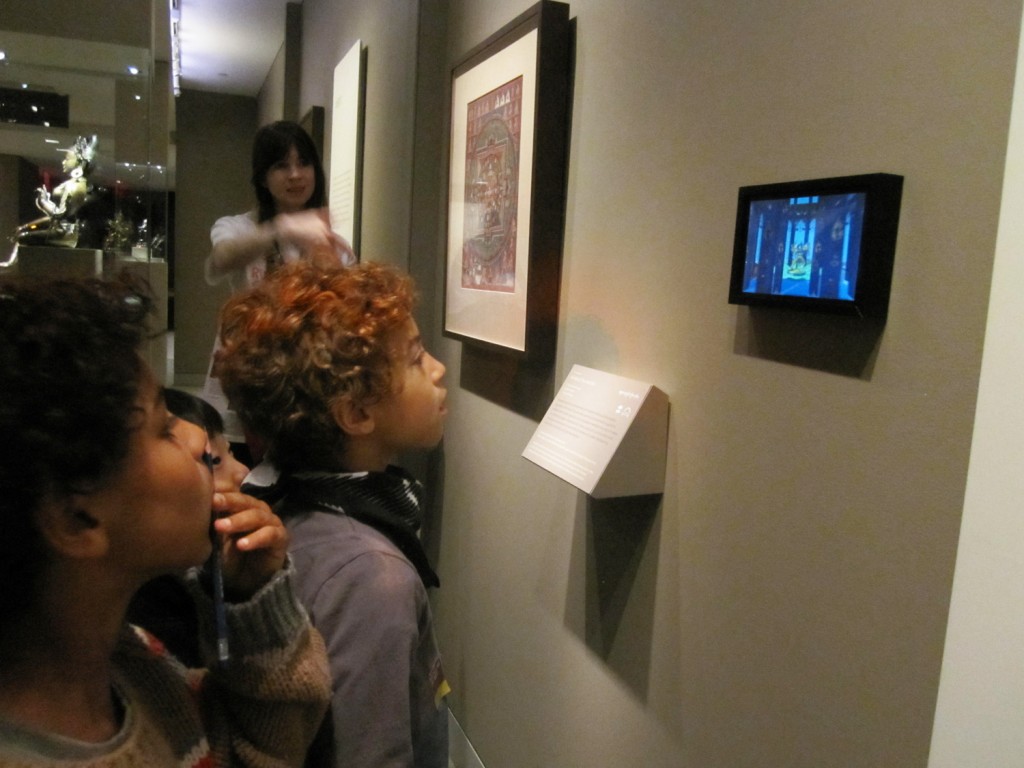
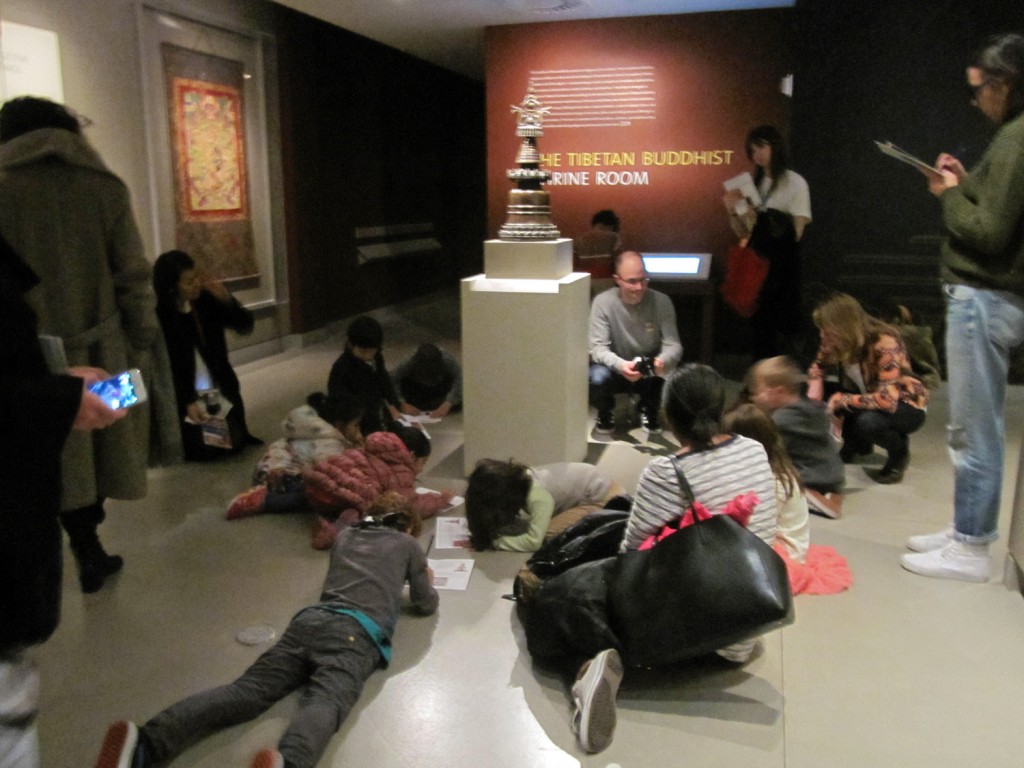
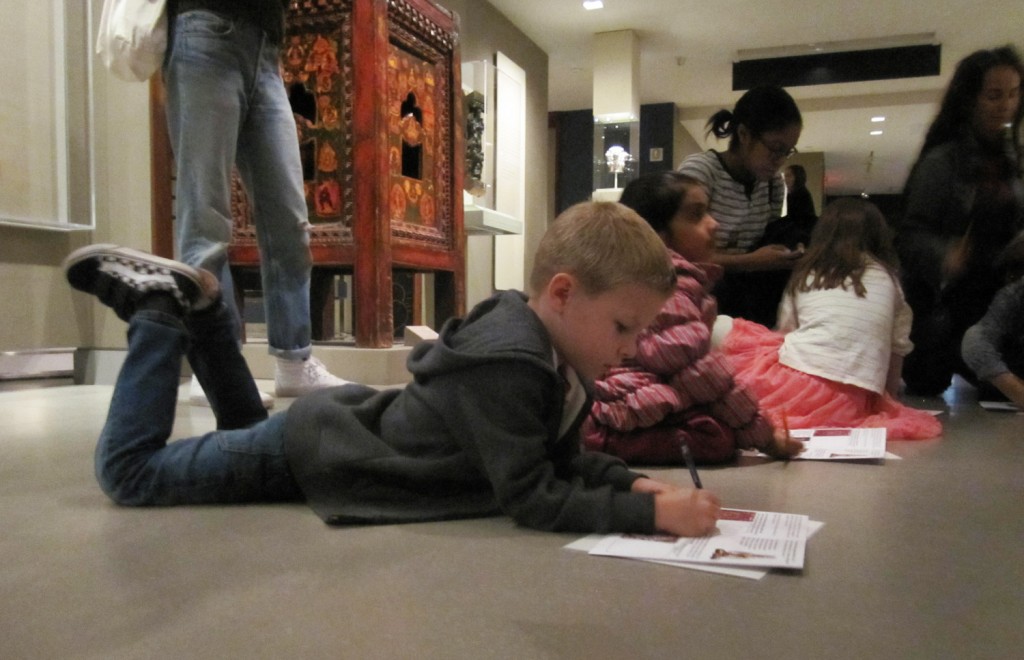
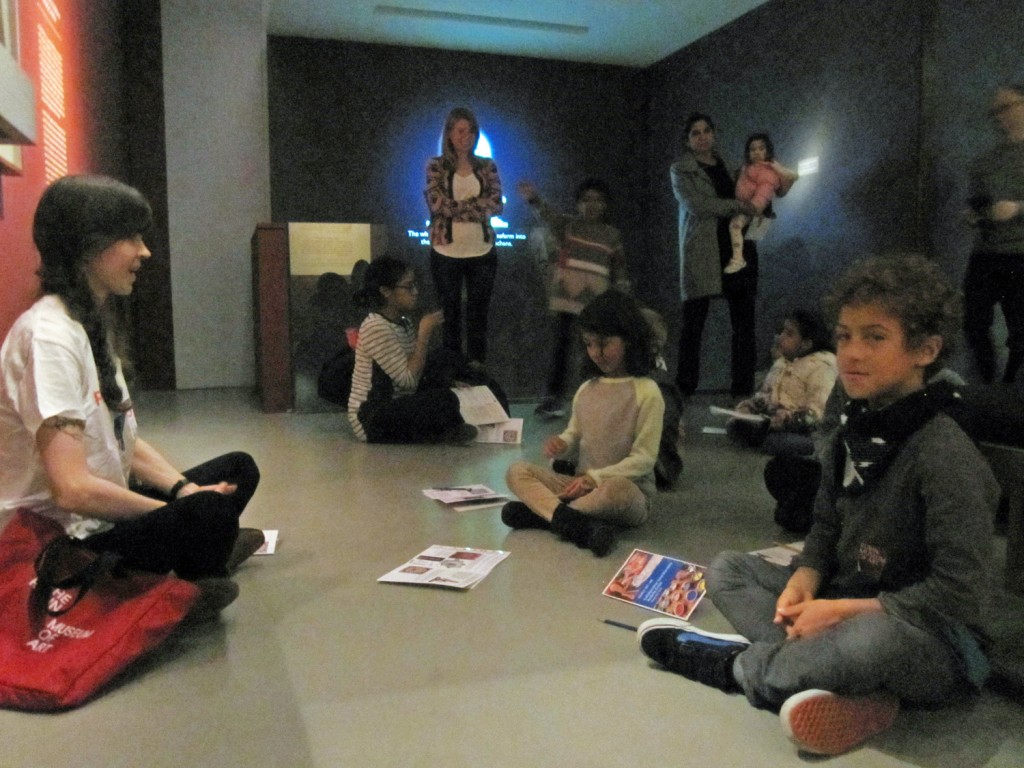
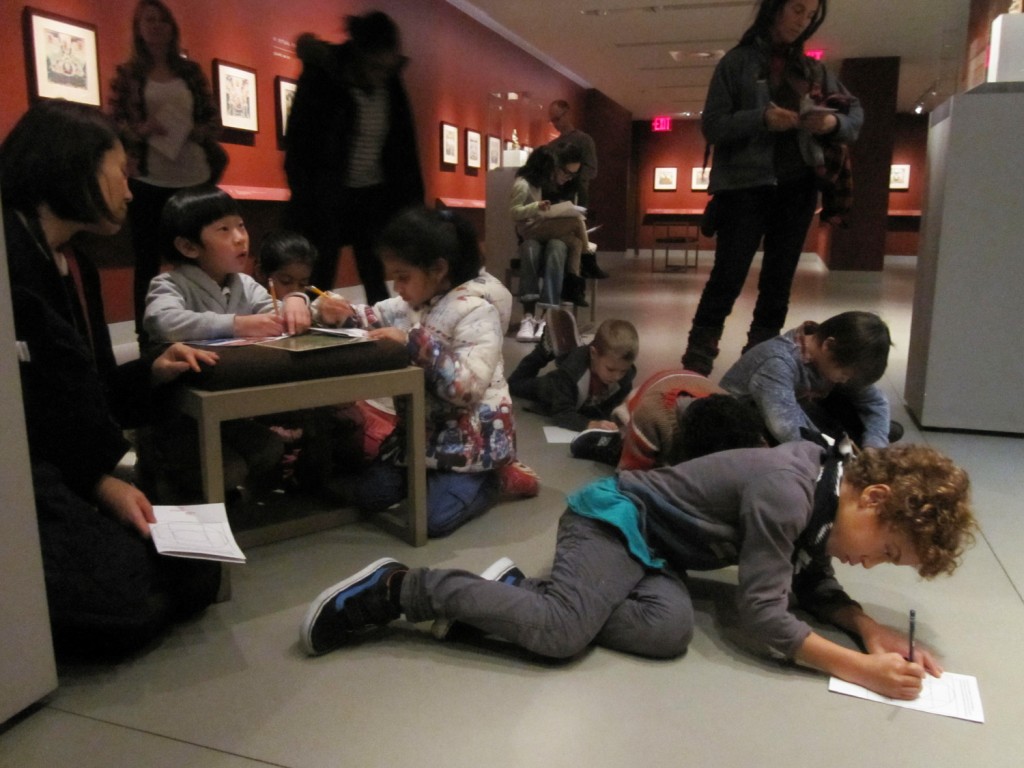
During the pre-visit, students warmed up their observational skills by looking at 12 works of art from China and Tibet.  They looked for common threads and curated mini exhibits highlighting different themes.

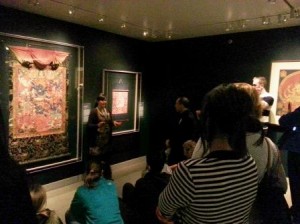
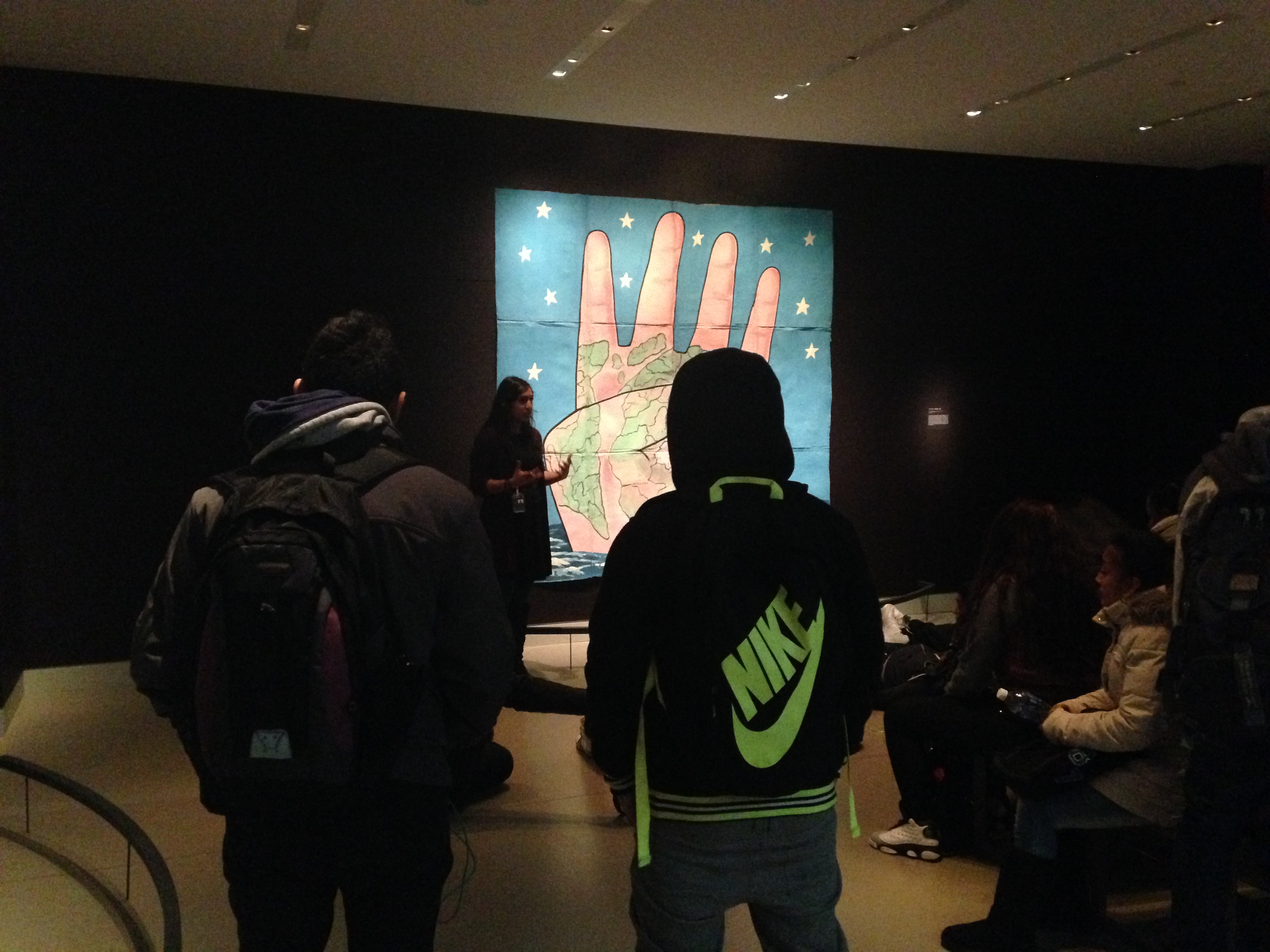
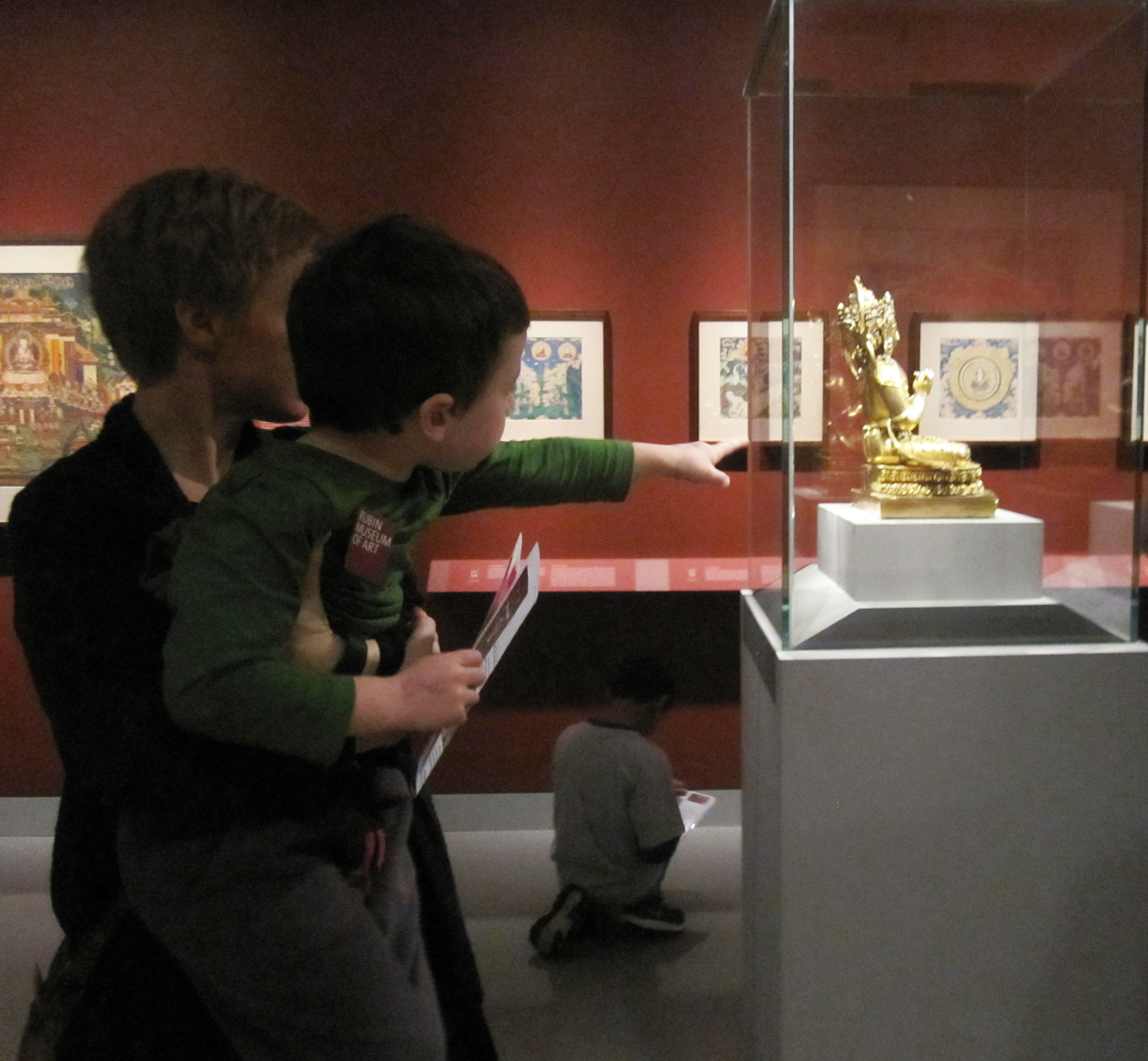
During the gallery visit, students considered the connections between Chinese and Tibetan cultures and looked at how these can be seen in the art at the Rubin Museum.

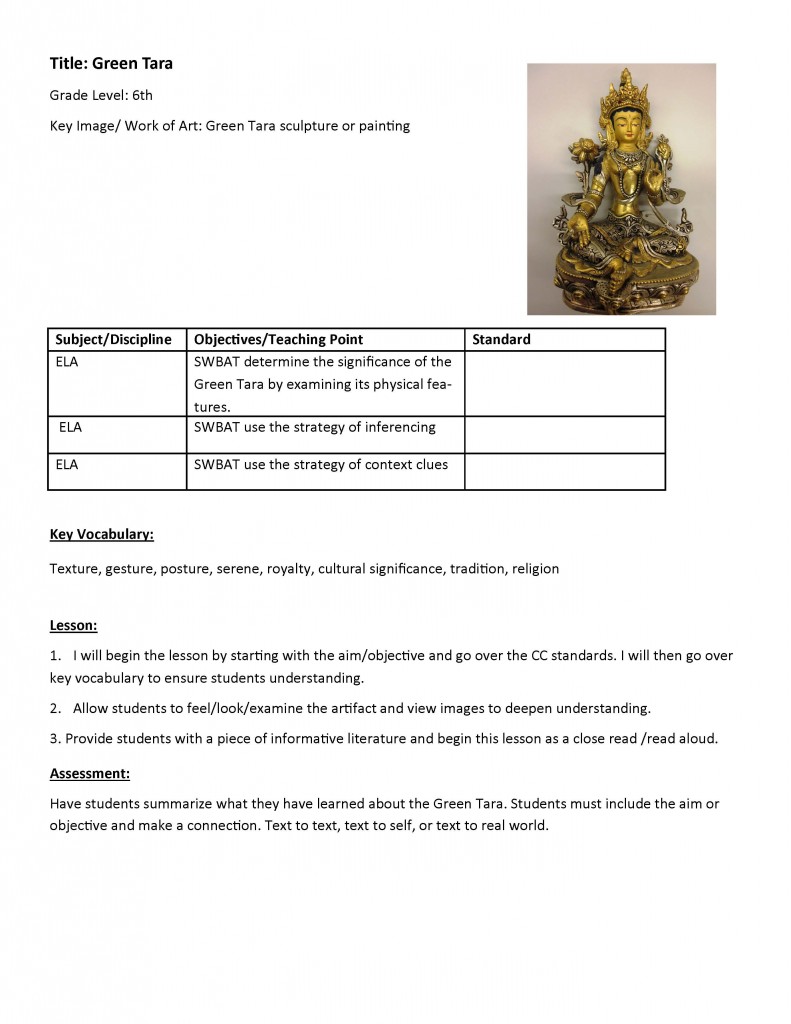
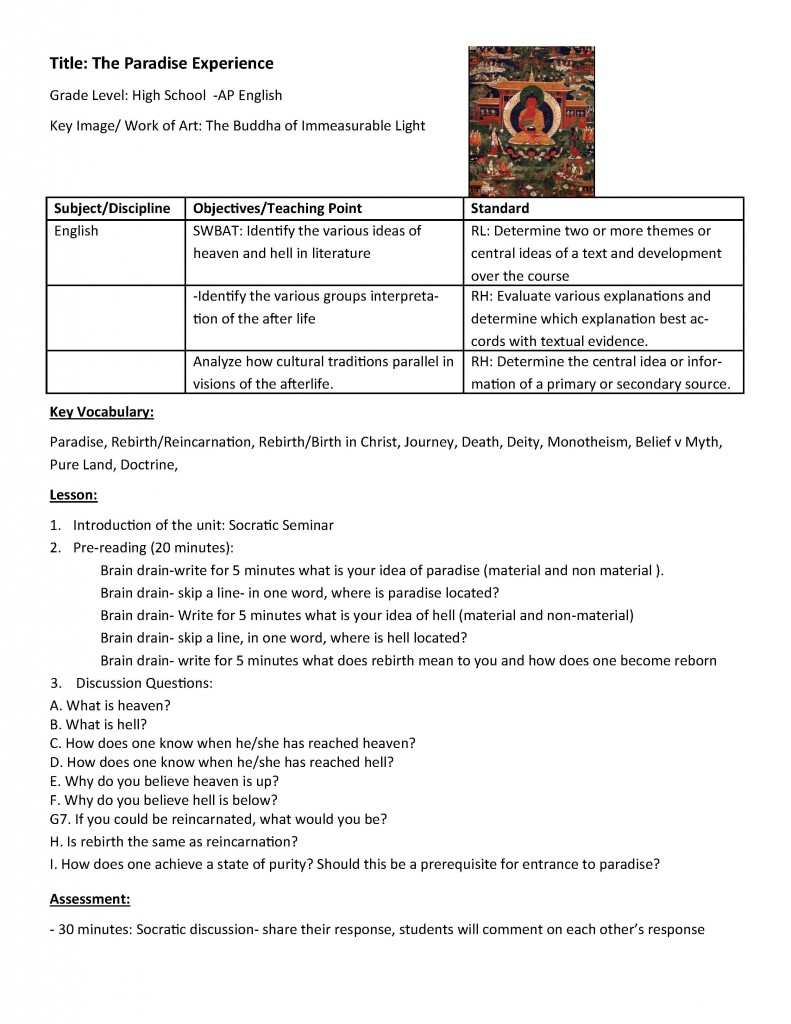
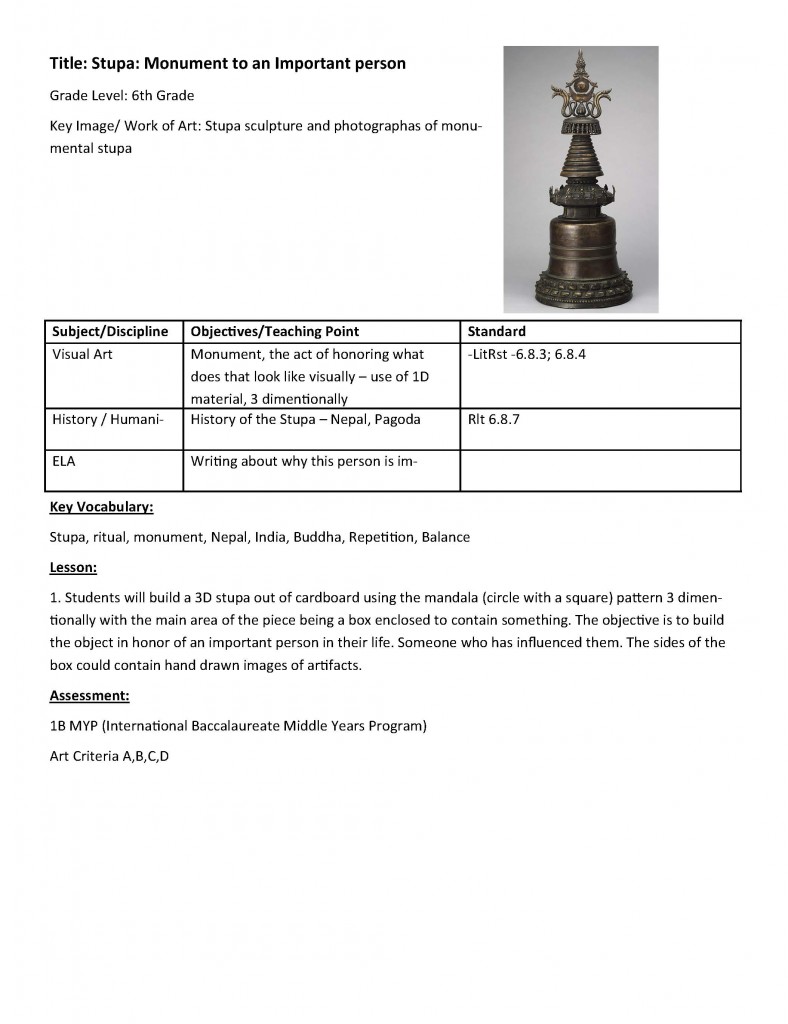
The discussion focused primarily on landscape elements such as mountains, rocks, clouds, and flowers.  Students also learned about the traditional process of making Tibetan thangkas, or scroll paintings.

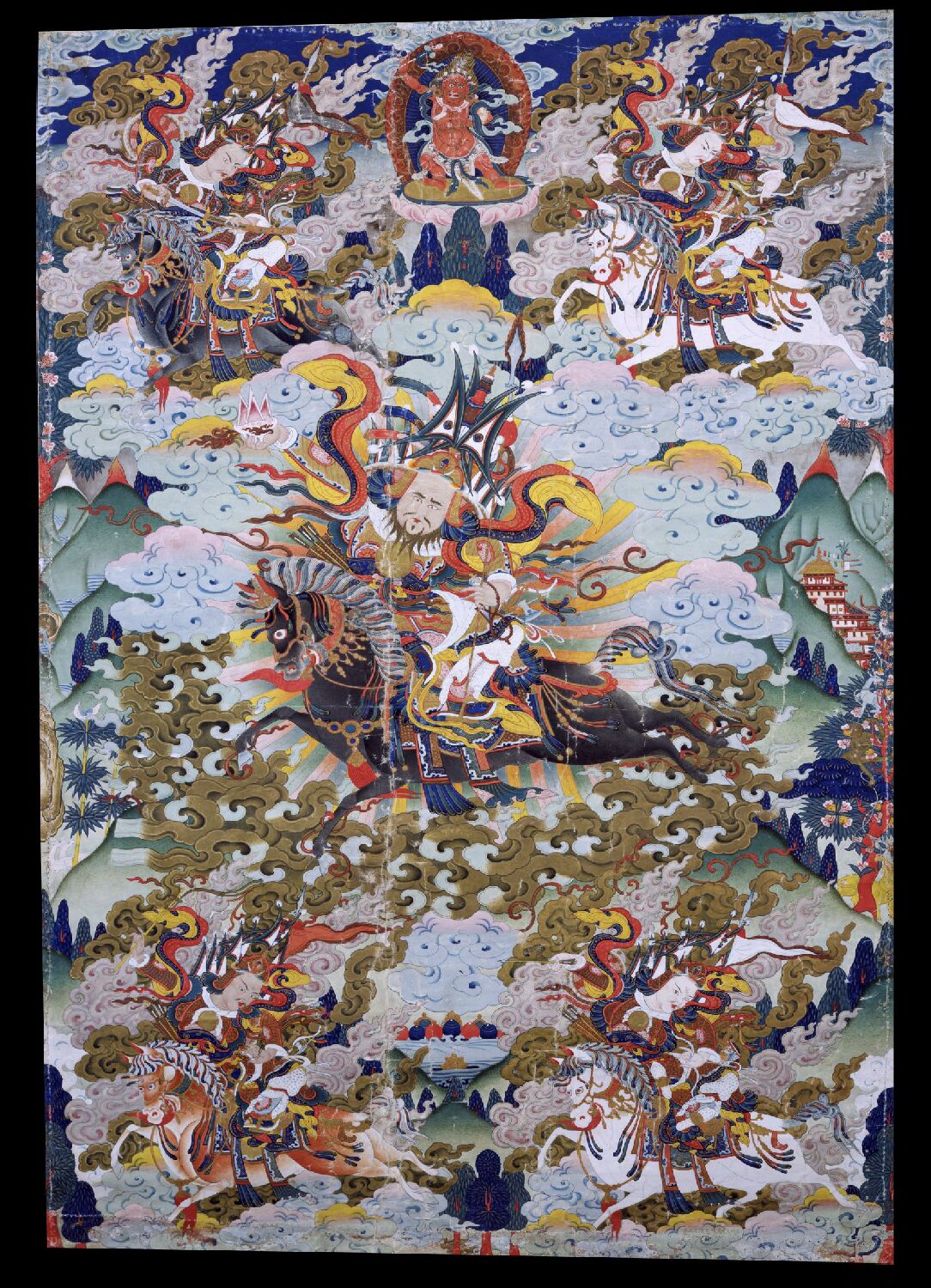
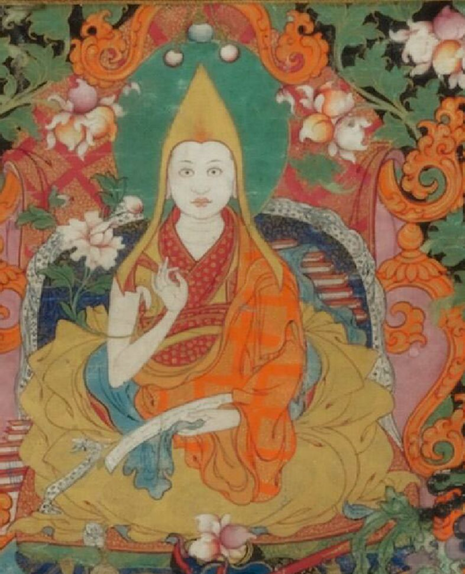
The Arhat Rahula as one of the Sixteen Arhats China; 18th century Rubin Museum of Art (C2004.9.1) (HAR 65363)

The Arhat Rahula as one of the Sixteen Arhats China; 18th century Rubin Museum of Art (C2004.9.1) (HAR 65363)

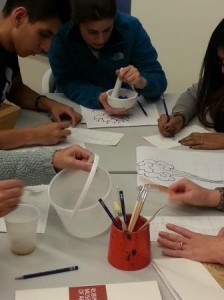
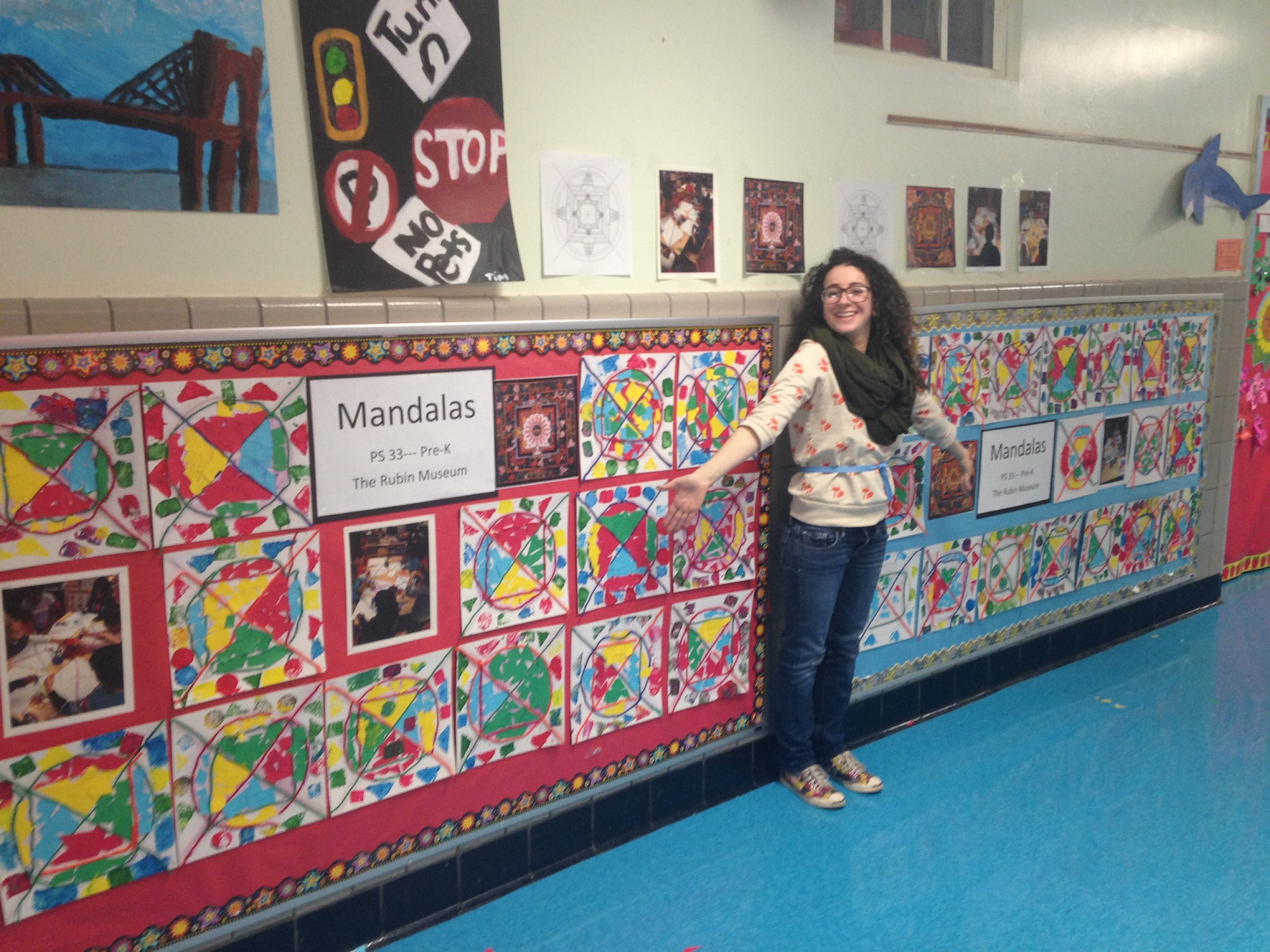
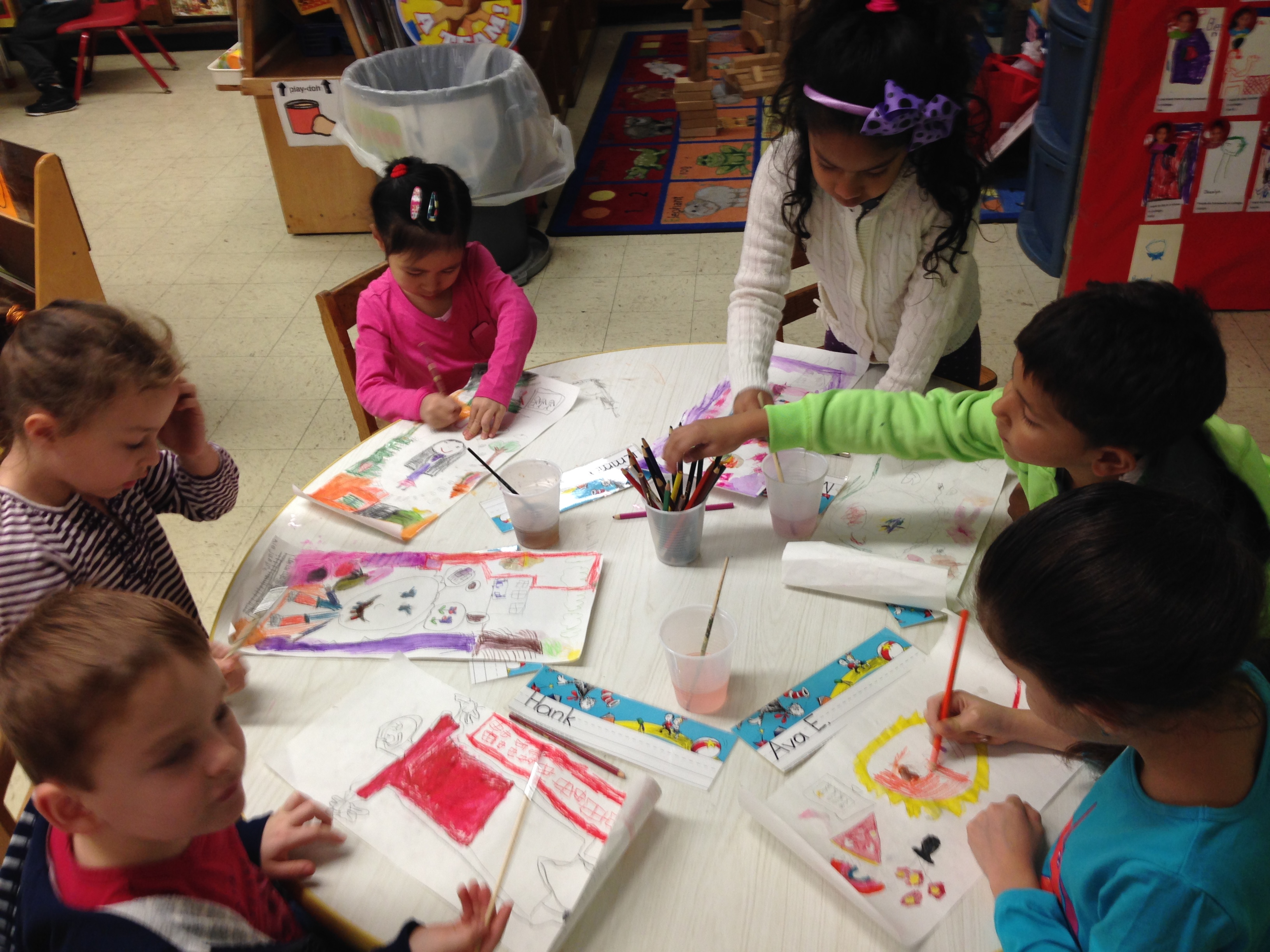
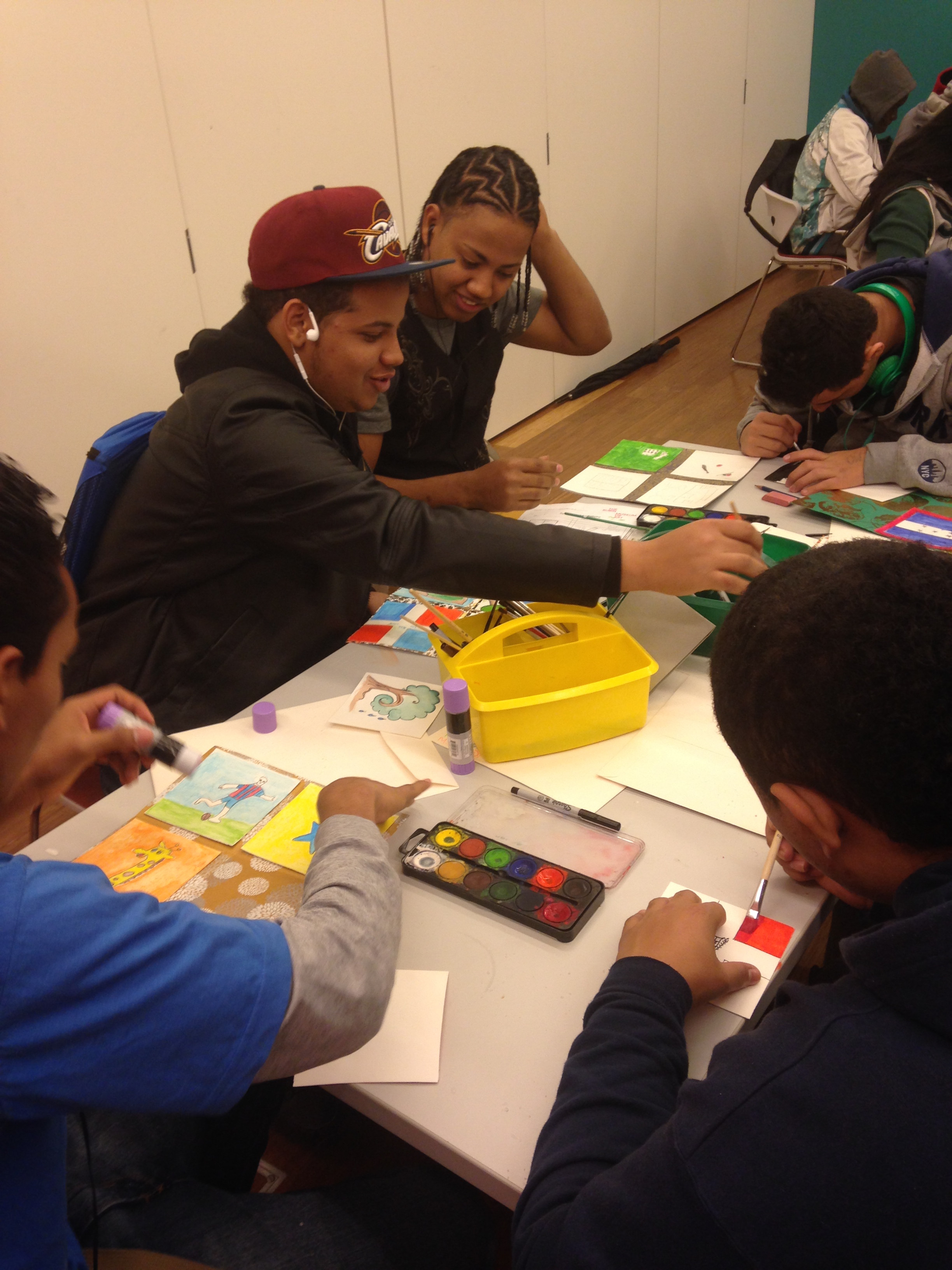
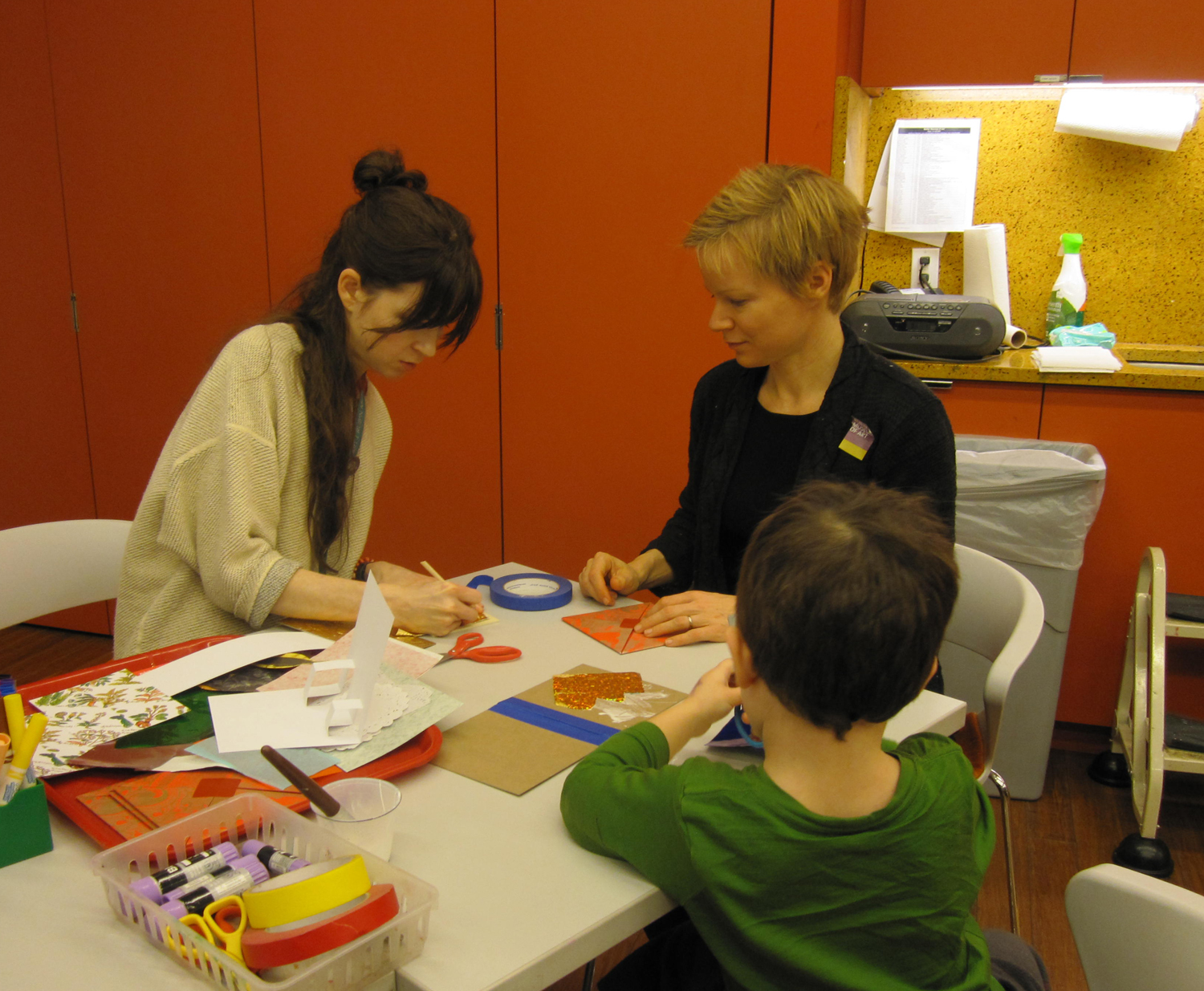
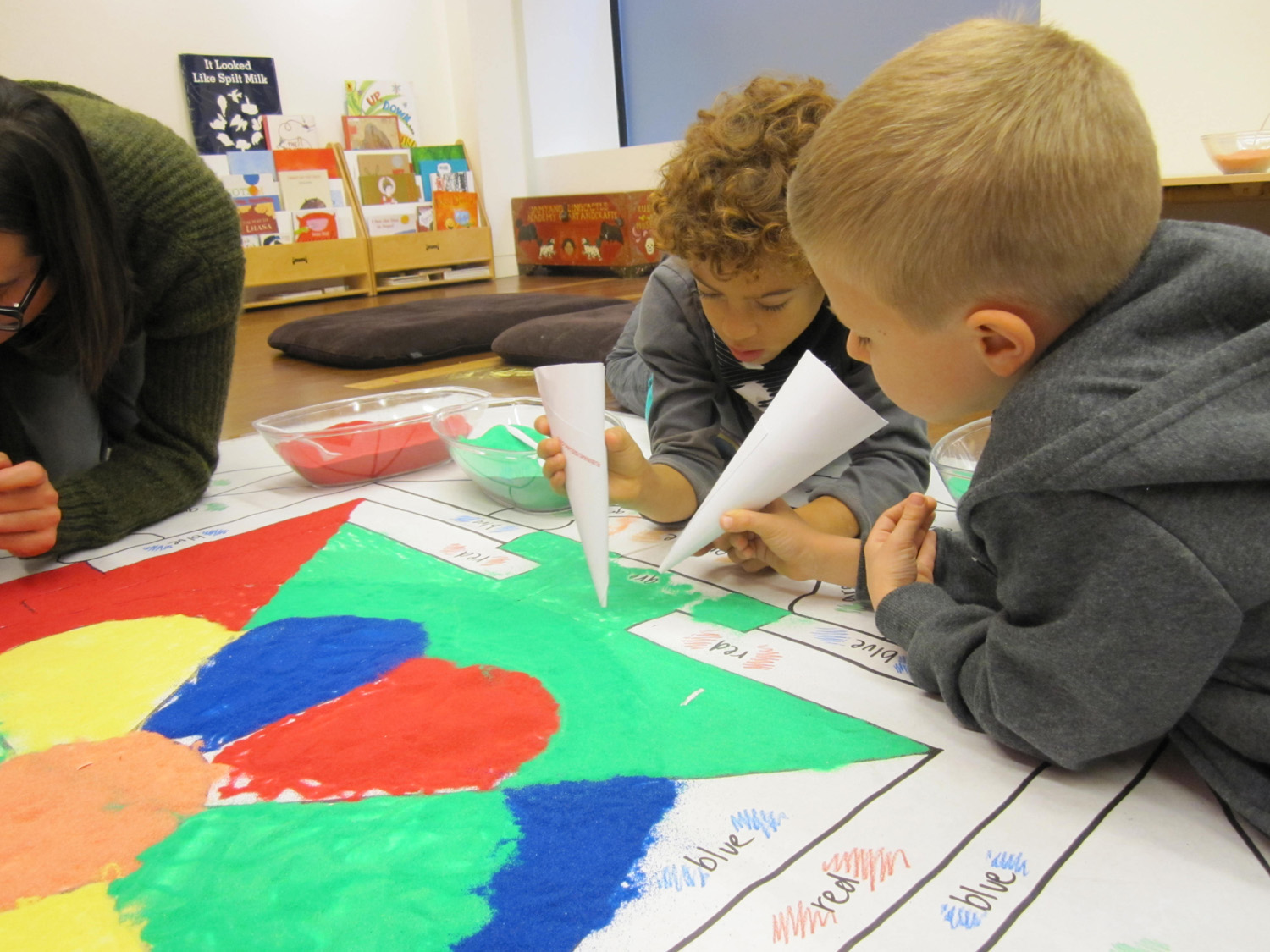
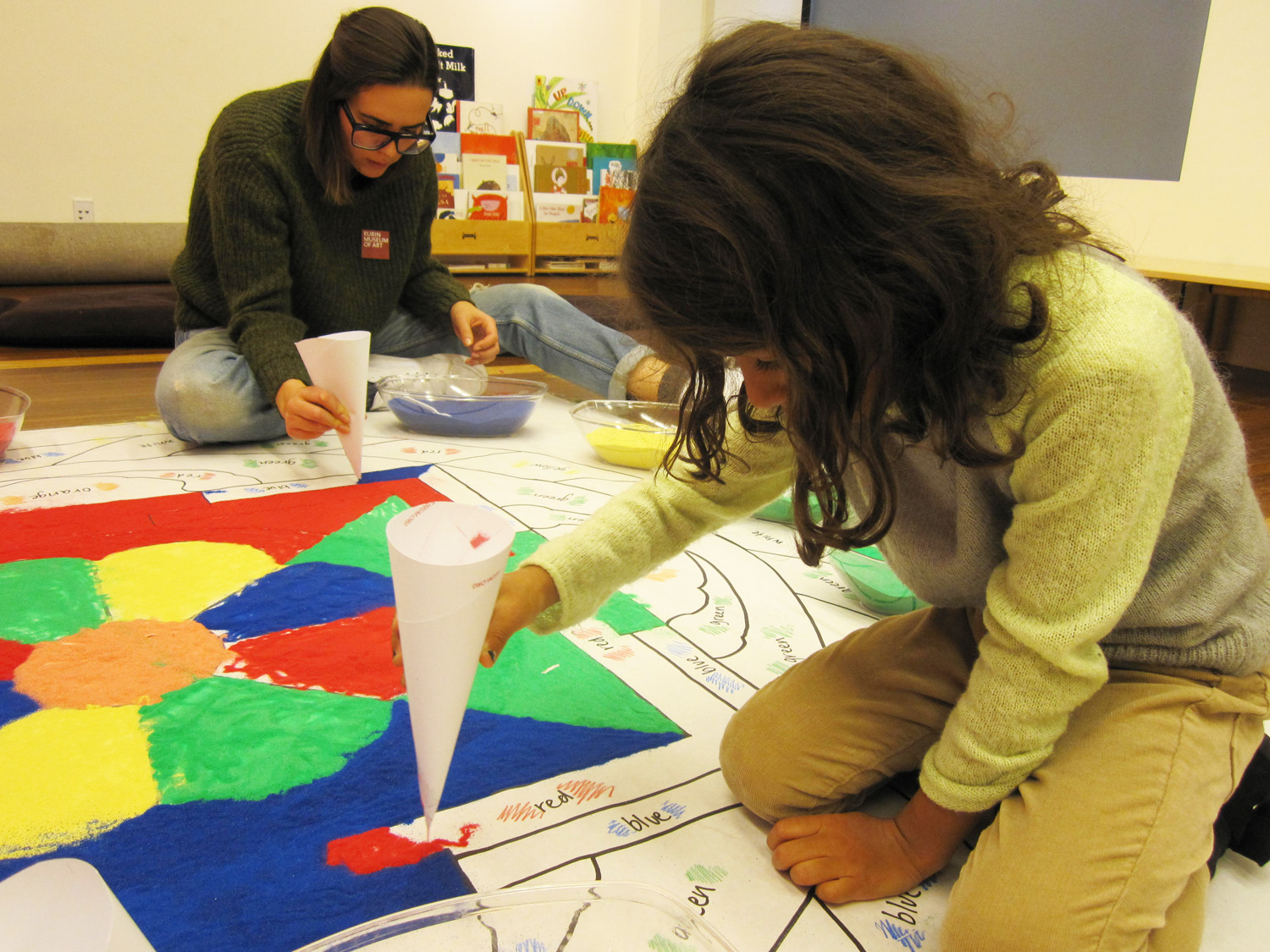
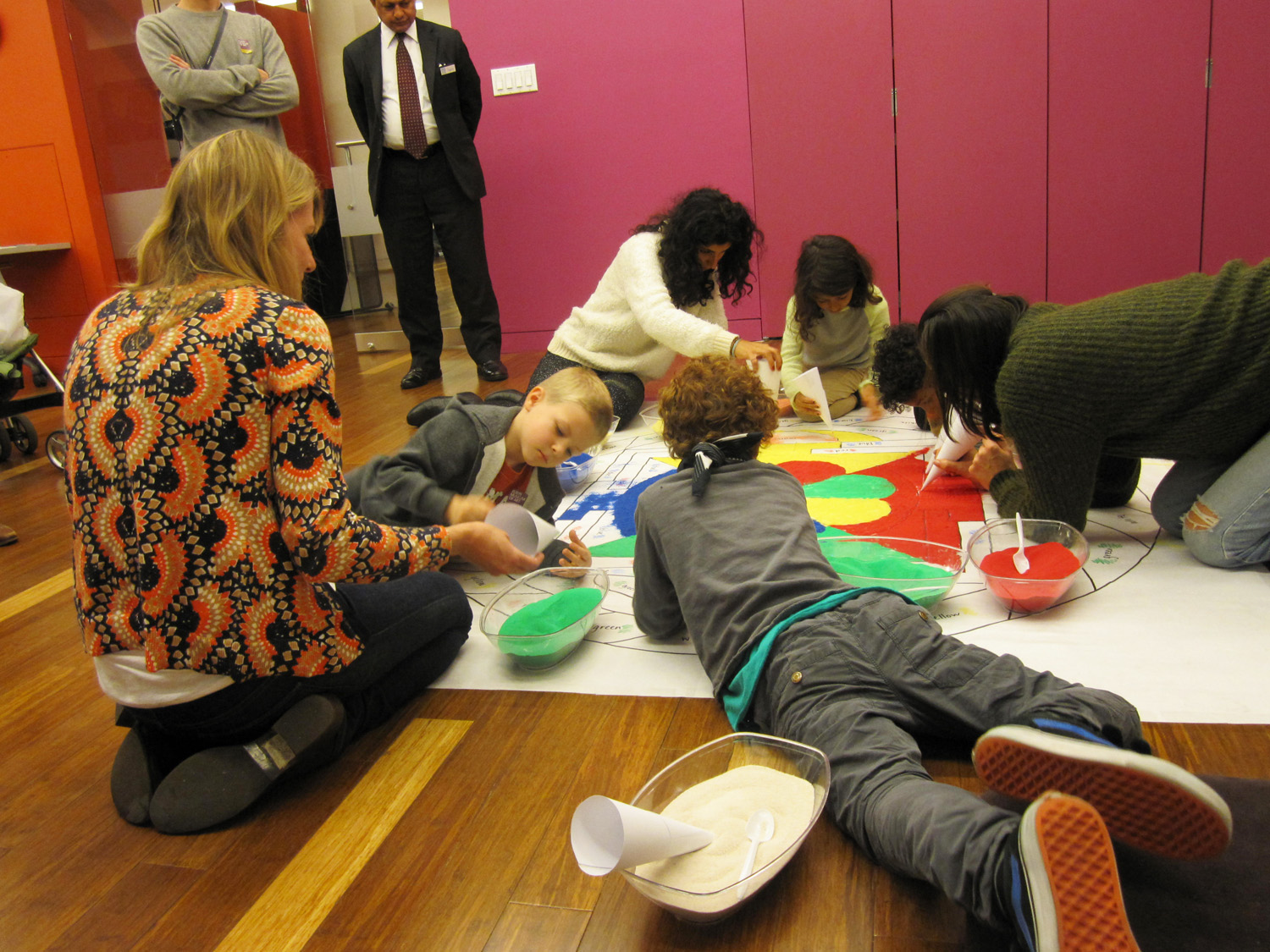
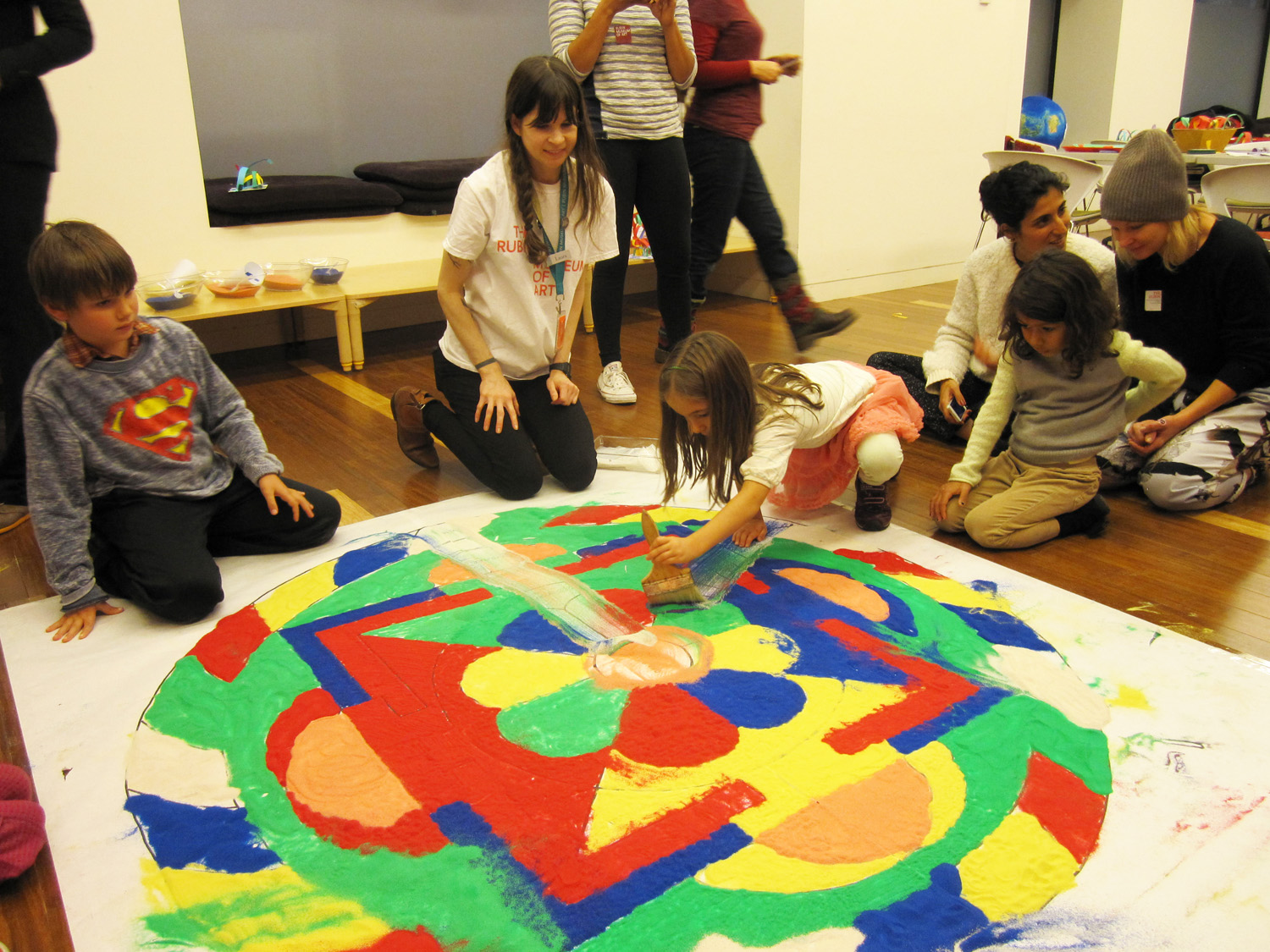
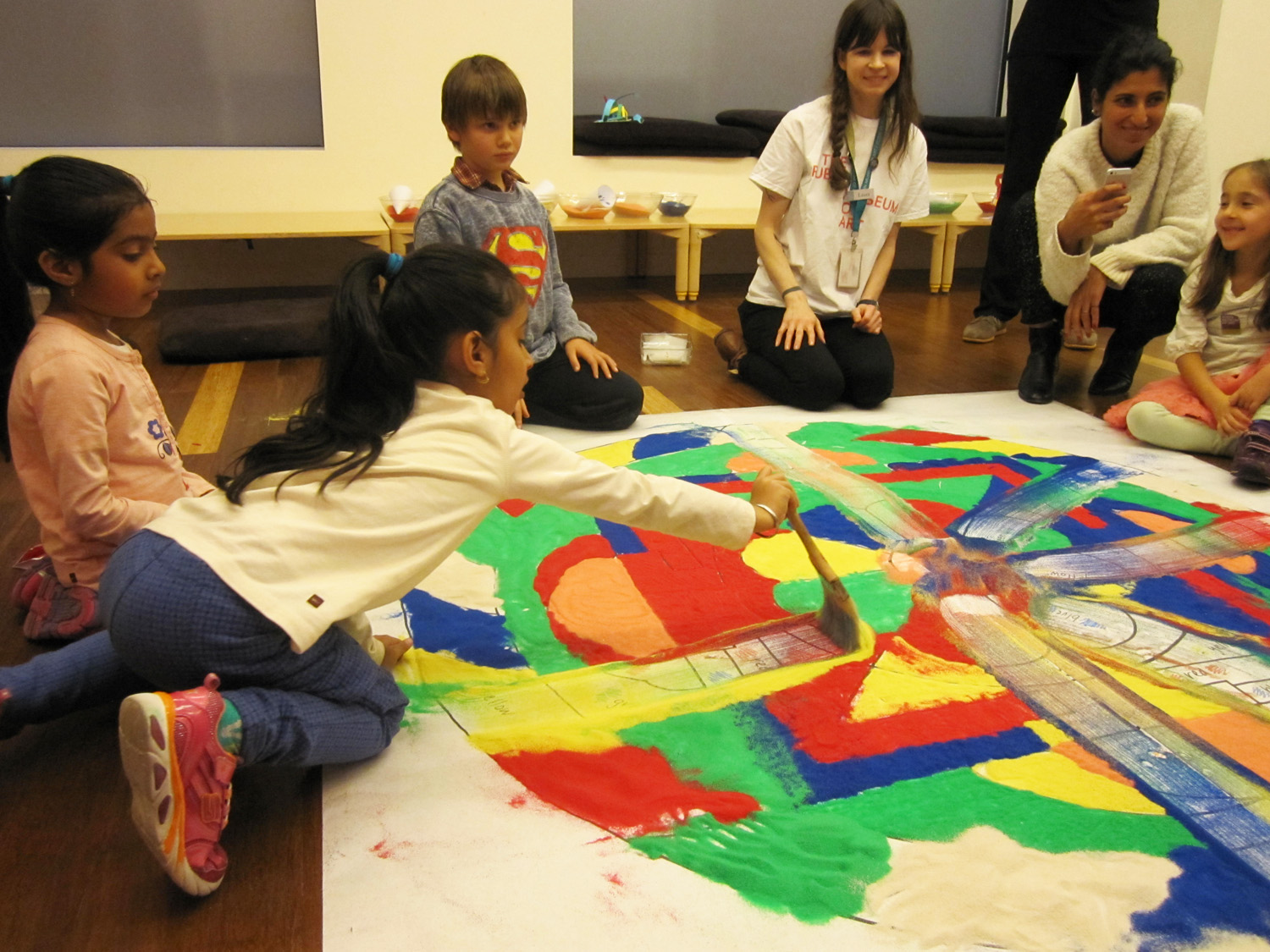
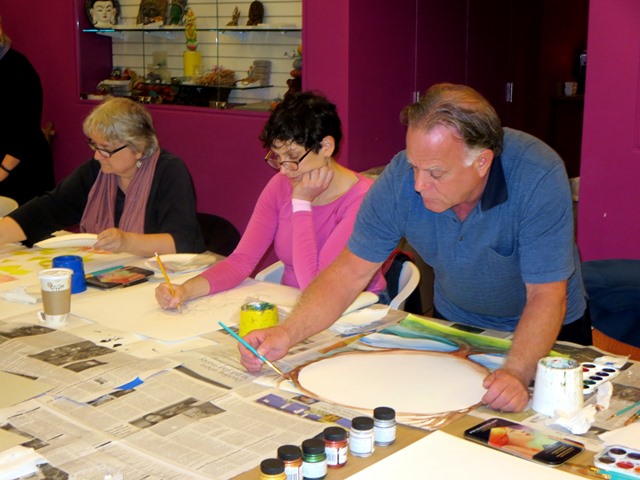
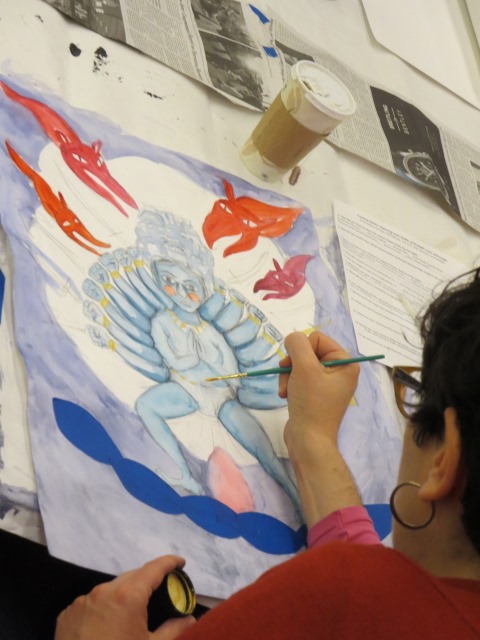
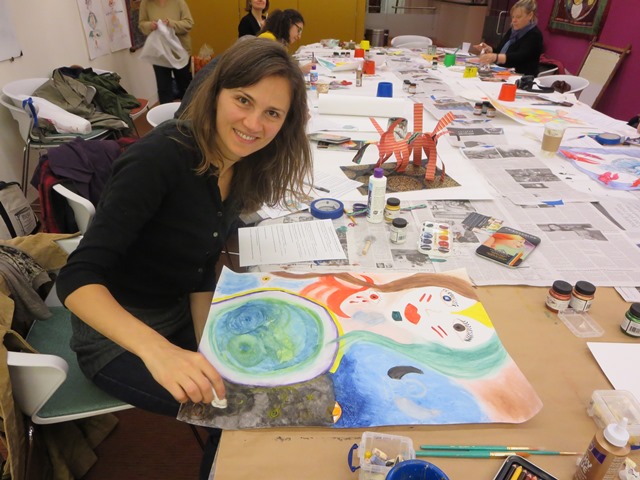
We continued this conversation in the post-visit in the classroom.  Students made distemper paint using mineral pigments with bovine hide glue as the binder. They carefully mixed the hide glue with water to dissolve it.  Then they transferred their designs to canvas – each student could choose one landscape element: a mountain, a lotus, or a cloud.


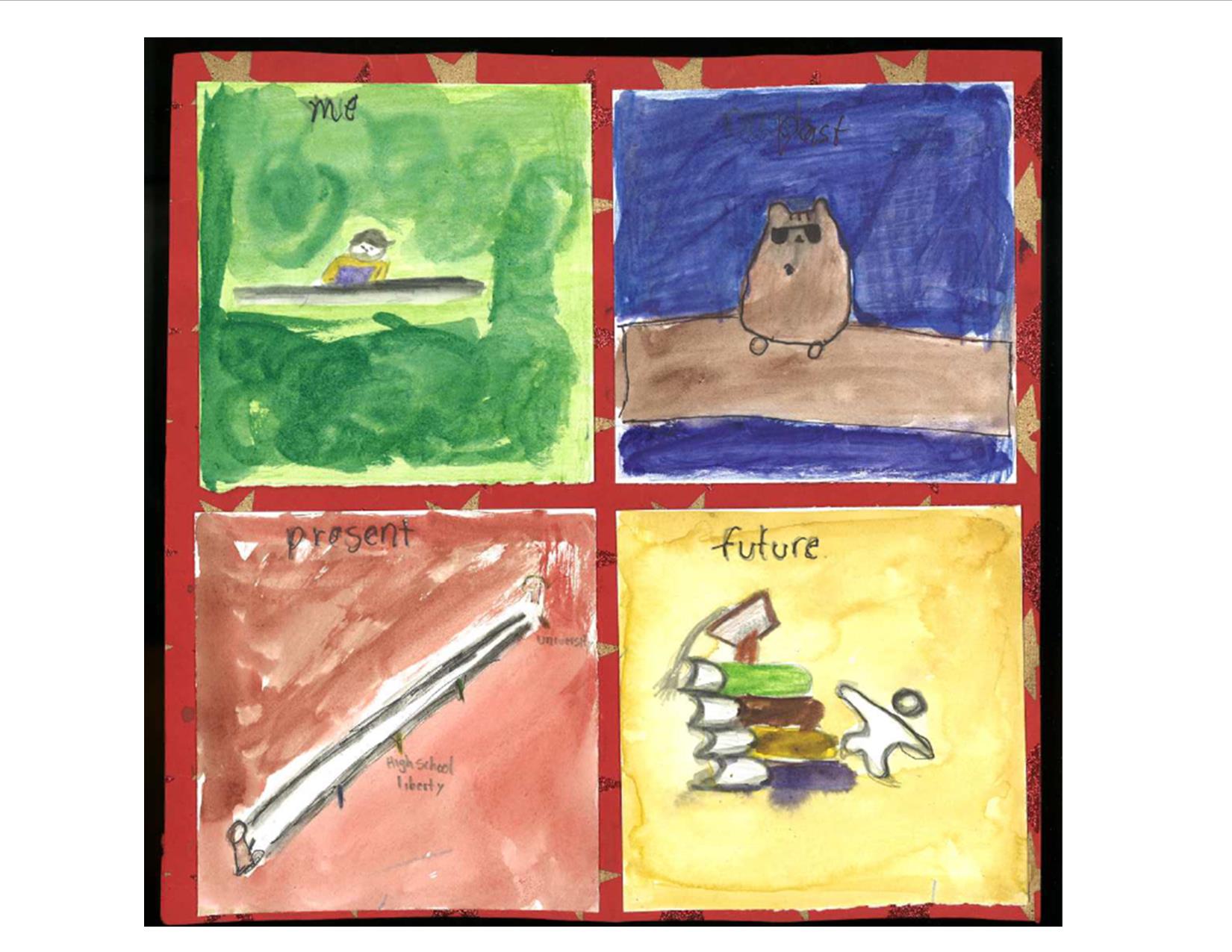
The final paintings were all beautiful and different!  The students enjoyed the process and will have completed works of art to display in their school!
 

Posted in Art Making, Himalayan Art, K-12 Schools | Leave a comment

Raja-Rani: King & Queen for a Day at Family Art Labs!

Saturday we had yet another fun day at Family Art Labs.  Our theme of the day was Raja-Rani, which means “King & Queen” in Hindi.  This workshop took us on an exploration of the newly opened Fiercely Modern: Art of the Naga Warrior exhibition followed by an art-making session where we made our own royal adornments.

The Naga people are known for their magnificent jewels, headdresses, belts and body cloths.  Our Activity Guides led us to stops at the body cloths, where we discovered many different patterns woven into the cloths; the jewelry cases, where we looked at arm bands and beautifully beaded necklaces; and the dugout drum, where we got to watch a video of Naga people playing the drum!

full group in museum

museum

museum

museum

We headed back to the Art Studio feeling completely inspired by the Naga exhibition.  Now it was time to make our own crowns…but these weren’t just any crowns…these were magnificent crowns with gems, shiny collage papers, sequins, feathers, metallic embossing papers, and, my personal favorite, glitter!

With their creative juices already flowing from our gallery exploration, everyone jumped right into the art-making process.

art making

We cut, we pasted…

art making

We feathered, we sequined…

art making

We embossed, we bedazzled…

art making

…And we glittered!

The results were super as always…and everyone left with a new crown (and a few lanterns and arm bands) to wear home.

crowns

It was truly a great way to spend a Saturday.  We are really looking forward to our next Family Art Lab, Gold Leaf Sculptures, on Saturday June 8th.  We’ll be exploring the soon-to-be open From India East exhibition followed by clay sculpting and learning the technique of gold leaf in the Art Studio!

It’s sure to be a popular Family Art Lab, so as always, we encourage you to purchase your tickets ahead of time to ensure your family gets to join the fun.

See you in a month!

Posted in Art Making, Education Center, Exhibitions, Family, Museums, Uncategorized | Tagged , , , , , , , , , , , , , , , | Leave a comment

Staff Connections: Talia Shulze, Assistant Manager of Media Relations

Running a museum takes a whole team of professionals whose different skills help make the Rubin Museum of Art one of the premiere places to visit. To get to know us a little more, and to explore different careers in the arts, each month we will be asking a Museum staffer/intern to answer six questions about their position at the Museum, their favorite artworks or exhibitions on display in the museum and other personal attributes. As the seventh installment of Staff Connections and in celebration of Bike Month, we’re going to be introduced to Talia Shulze, a frequent bike rider to the museum and the Assistant Manager of Media Relations!


Talia Shulze, Assistant Manager of Media Relations

RMA: What is your title and what do YOU do here at the Museum?

My title is ‘Assistant Manager of Media Relations’ which entails everything from writing and sending out press releases, responding to requests for information or images, coordinating and supervising photo or film shoots in the Museum, event publicity, organizing copy for our monthly email newsletter, and also managing the Museum’s main social media accounts. A little bit of this, that, and the other.

RMA: Where are you originally from and how did you end up at the Rubin?

My family lives in Pennsylvania where I grew up. I attended the Sculpture program at Virginia Commonwealth University, and have a fairly hodgepodge resume. Most of my professional experience before coming here was in public relations, art galleries and some nonprofit management; it turned out to be a great match for the job in terms of skills. I was referred to the position by a coworker in the development department.

RMA: What is your favorite thing about your job?

It’s been a crash course in Himalayan Art! I find new things to learn about every time an exhibition opens. New York is the museum capital of the country and the Rubin Museum is the only museum in North America that deals specifically with the Himalayas, I’m working with professionals who are at the top of their field in every aspect.

RMA: How long does it take for you to bike to work?

It’s about 40 minutes each way and 12 miles round trip. If I didn’t have to deal with the Williamsburg Bridge my commute would be much shorter. It’s a pretty steep bridge.

RMA: What is your least favorite thing about riding your bike to work every day?

I have to be choosier about my work clothes, a lot of times if I feel that I need to have a more professional appearance for a meeting or event I won’t bike because I want to look more put together. Cyclists who aren’t mindful of others, either because they’re aggressive, or because they think bikes really can go wherever also irk me when I’m trying to get to work in the morning. It’s super important to be respectful, and also to be predictable on a bike.  The ultimate worst aspect of biking is I can’t catch up on reading the New Yorker, but I could if I took the subway to work.

RMA: What is your favorite part about riding to work every day?

When I get to the top of the Williamsburg Bridge and I can see the skyline from LES to Midtown over the East River before having to face reality/traffic on Delancey Street.

RMA: What advice would you give to someone who wanted to follow the same career path?

I knew that the Rubin Museum had to be a great place to work because a friend reached out to me about applying this position, but networking is key, if I hadn’t put it out there that I was looking for work, maybe they wouldn’t have thought of me at all. If you have friends who work in museums talk to them about what they do, and ask if they can pass along job postings. I also feel that it’s important to have things going on besides your job. It can be something career oriented, or something that takes you in a totally different direction. I’m an artist [taliapearl.tumblr.com] and ultimately it’s more important in the long run that I feel fulfilled through my studio practice. That doesn’t mean that I am not serious about what I do at the Museum at all, but I love that I have that to go home to.

RMA: If you could travel anywhere in the Himalayas where would you go and why?

I hear Mount Everest is a cool place to visit, especially in the winter. I like to be in nature a lot, it would be nice to hike Manaslu if I ever get the opportunity.

To follow the museum’s social media channels click the icons below:

Posted in Staff Connections | 1 Comment

School Programs Explore Painting Materials!

Earlier this week, the School Programs team experimented with and explored the possibilities of using natural mineral pigments and bovine hide glue to create our very own paint!

Mixing the pigments in with our mortar and pestle

We mixed up four powered pigments (made from ground minerals) with water using a mortar and pestle. Then we added the hide glue that had been mixed with water and heated, to help dissolve the powered glue.

Hide glue + ground pigments + water = paints!

Larissa and I used those freshly mixed paints to create small paintings of stylized clouds, lotus flowers, and rock formations to use as examples for future projects with students and educators.

Himalayan Stylized Cloud Painting

The paint was rich in color, and mixing the paints together created vibrate shades and hues. Applying the paint to the canvas, it felt very smooth and was easy to spread around. A little bit a paint really went quite a long way on the primed canvas surface.

Lotus and palate of paints

Table FULL of materials!

The paints used to create most of the paintings found in the collection at the Rubin Museum of Art were made using a similar process. While we started with pre-ground pigments and hide glue, in traditional Himalayan paintings- the artist would often start the process by grinding the mineral to get the ground pigment and use Yak glue as the binding agent! Here is a video demonstrating the traditional process of creating paint in Himalayan Asia:

Stay tuned for more exciting blog posts about School Programs and Ground Pigment Paints! Larissa had the opportunity to work in a classroom this week using all of these materials- can’t wait to see the students final works and hear about the experience!

Posted in Art Making, Himalayan Art, K-12 Schools, Museums | Leave a comment

Magical Masks at Family Art Labs!

Not only is spring finally here, but we had a great turnout for Saturday’s Family Art Lab, Magical Masks!  This workshop took families on an exploration of Tibetan Masks through a mini presentation, a journey through the galleries, and an art-making session.

Looking at the masks from the museum’s touch collection made everyone eager to begin crafting their Magical Masks.

touch collection

Before we could begin the art-making process, we had to learn more about the masks we’d be creating…

What is a mask and what are the different ways a mask can be used?  Through our discussion, we learned that masks have many different uses.  They can disguise us, they can be worn for religious or ceremonial practices, or they can transform us into other creatures!  We learned that in Tibet, masks are often made to look like animals and that their colors have special meanings – red represents bravery, yellow – knowledge, and green – kindness.

presentation

We followed our discussion with a trip to the museum to look at the masks that hang in the museum’s lobby.

spiral lobby

lobby masks

We continued our exploration on the 5th floor gallery, Flip Side: The Unseen in Tibetan Art.  Families used their Magical Mask Activity Guides as tools to uncover stories about the artworks in the exhibition and to provoke thought about the masks they would create.

After being fully inspired by artwork we saw in the museum, we arrived back at the Art Studio and quickly put ourselves in artist-mode!  There were several varieties of animal masks to choose from and endless supplies to decorate them with.

We began by painting our masks, thinking about the special meanings of colors in Tibetan Masks and also what types of designs would enhance our masks most.  Once the masks were painted, they had to be quickly dried for decorating.  Being creative thinkers, we used hair dryers and fans to speed along the process.

drying station

fans

Now it was time for adding feathers, gems, sequins, shiny adornments, pipe cleaners, metallic foil…you name it, we decorated with it!  It was pretty amazing to see all of the supplies put to use in such clever and unique ways.

masks

masks

masks

masks

Everyone was proud to show off their finished product…

masks

masks

Exploring the art of mask-making was a truly special experience and I’d definitely say that the masks created in Saturday’s Family Art Lab were no less than magical.

The Family Programs Team is looking forward to May’s Family Art Lab, Raja-Rani: King and Queen for a Day, based on the exhibition, Fiercely Modern: Art of the Naga Warrior (opening soon)!  Please visit our website for more information about Family Art Labs and to purchase tickets.

See you in May!

Posted in Art Making, Education Center, Family | Tagged , , , , , , , , , , , , , , , | Leave a comment

A New Way to Look at our Looking Guides

This afternoon I came across an interesting package on my desk.  The envelop was made of calendar sheets from 2011 addressed to the Rubin Museum of Art in bold black Sharpie.  Within the grid sheets was one of our Looking Guides that we distribute for free within the galleries to help visitor’s recognize common symbols and important figures in Himalayan Art.

To my pleasant surprise our standard Looking Guide took on a whole new form.  As I flipped through the pages it became apparent that a visitor decided to create new works of art using the guide as their canvas.

Cover

Envelop to the Rubin Museum of Art

Checking the address I noticed the work had been done by a New Jersey artist, Robert Bohn, who on his website states that his work attempts to “re-establish the definition and purpose of our daily objects to inspire observational awakening and create resourcefulness in our communities.”


At the end of the booklet was a small message to the museum stating “Thanks for the Show.” No Robert, thank you.

"Thanks for the Show"

Posted in Art Making, Resources | Leave a comment

Welcome Bill Appleton-Director of Education and Visitor Experience

Bill Appleton-Director of Education and Visitor Experience


It is with great pleasure that the Rubin Museum of Art and the Education Department welcomes its new Director of Education and Visitor Experience, Bill Appleton!

Before arriving to the Rubin Museum of Art, Mr. Appleton served as the Assistant Director and Head of Education for the Saint Louis Art Museum since 2002. He lead a division of 30 employees and 100 volunteer docents and was responsible for helping cultivate support for and sustain sponsorships of educational programs.  Bill is also an Education Committee board member of the American Alliance of Museums (AAM), and has been a grant reviewer for the Institute for Museum and Library Services (IMLS) for the past several years.

Previously, Mr. Appleton was the Director of Public Programs and Education at the Morgan Library. He has held earlier positions at Milton Academy, Doubleday Publishing, Herbert Barrett Music Management, and the New York Philharmonic. During most of his earlier years in New York City, Bill also taught history and Latin on evenings and weekends to inner-city public school students.

Bill received BA and MA degrees in Classics, from Wesleyan and Brown Universities, respectively. In 2012, he was awarded a Kress Fellowship for Museum Education at the Clark Art Institute to explore the relationship of scholarship to the public understanding of art, and to develop new avenues and innovations in museum education.

His extracurricular activities include adjunct teaching responsibilities at two universities, serving as a journalist for St. Louis publications, publishing music criticism, performing cello in a community orchestra, and coaching youth sports. He and his wife Jane have two daughters.

Please join us in welcoming Bill Appleton to the Rubin Museum of Art!

Posted in Museums, Staff Connections | 1 Comment

Rubin Museum Reception and Baruch College Conference

The Rubin Museum of Art and Baruch College are partnering to promote an upcoming conference, Museums and Higher Education in the 21st Century: Collaborative Methods and Models for Innovation taking place at Baruch College, Thursday, April 25, 8:00 am – 6:30 pm.

Conference sessions will explore the hypothesis that exposure to and participation with the arts provide enriched and innovative learning experiences for college students inside and outside the classroom. Presenters will examine collaborative models between arts institutions, particularly museums and colleges and universities, and examine how educators are integrating the arts across the curriculum. As part of the program, Beth Harris and Steven Zucker, co-creators of Smarthistory, a multimedia web-book about art and art history, will present from 1:00 – 2:00 pm.

To kick off the conference, the Rubin Museum is hosting a reception Wednesday, April 24, 4:30 – 7:00 pm. Christian Luczanits, Rubin Museum Senior Curator, will give a private tour of his innovative exhibition, Flip Side, at 5:30 pm. The Flip Side presents both sides of a beautiful group of Tibetan scroll paintings (thangkas), sculptures, and initiation cards in detail, revealing clues to their meaning, function, and historical context. Flip Side exhibition 

Conference events are free and open to the public. Please register to attend one or both events.

Rubin Museum Reception registration: April 24, 4:30-7:30 pm; Flip Side tour with Christian Luczanits, 5:30 pm. Rubin Museum of Art, 150 W. 17th Street. To register click here        

Baruch College Conference registration: April 25, 8:00 – 6:30 pm. Baruch College, Newman Conference Center, 7th floor, 151 East 25th Street. To register click here

Baruch College Conference questions should be directed to Dr. Stan Altman, Director of the Baruch College-Rubin Museum Project: stan.altman@cuny.baruch.edu or 646-660-6792.

Rubin Museum Reception questions should be directed to Laura Lombard, Manager, University Programs & Partnerships: llombard@rmanyc.org or 212-620-5000 ext. 246.

Posted in Uncategorized | Leave a comment

Cool Culture Family Day at the Rubin!

Over the weekend Family Programs held our spring Family Day with Cool Culture.   We worked hard the past few months preparing for the event, and were finally rewarded in a fun and successful day!  The families of Little Star Head Start program had a great time making art with us and exploring the museum.

Our theme for the event was the story of the The Four Harmonious Friends.  The story tells of an elephant, a monkey, a rabbit, and a bird and teaches us the importance of respecting our elders.  Children and their families followed the story by creating each of the four animals at separate stations in the Art Studio.

Making Elephants

Making rabbits

Then they joined all of their animals together to make a mobile in the final part of the art-making at the stringing station.  Children were thrilled to see all of their animals together in a mobile they could hang at home!

child with mobile

When the mobiles were completed, families joined a guide and a Family Programs educator at the museum to hear the story of the The Four Harmonious Friends and to explore the 2nd floor exhibition, Gateway to Himalayan Art.  In the galleries families were invited to go on a scavenger hunt for animals in the artworks.  Parents and children had a great time working as a team to search for the animals and discovered some pretty amazing artworks on the way.

museum

It was a truly great day that could not have happened without the help of all of our staff…

Staff group photo

Our partners, Cool Culture and Little Star.

Our unbelievably helpful volunteers, courtesy of the Chinese American Planning Council

Cool Culture Volunteers

And most importantly our enthusiastic families!

children group photo

We are looking forward to more family events and more family explorers at the Rubin Museum!


Posted in Art Making, Education Center, Family, Museums, Outreach, Uncategorized | Tagged , , , , , , , , , , , , | Leave a comment

Staff Connections: Florencia Varela, Assistant Manager of Membership

Running a museum takes a whole team of professionals whose different skills help make the Rubin Museum of Art one of the premiere places to visit. To get to know us a little more, and to explore different careers in the arts, each month we will be asking a Museum staffer/intern to answer six questions about their position at the Museum, their favorite artworks or exhibitions on display in the museum and other personal attributes.  For the sixth installment of we’re going to be introduced to Florencia Varela, Assistant Manager of Membership!

Florencia Varela, Assistant Manager of Membership

RMA: What is your title and what do YOU do here at the Museum?

My title is Assistant Manager of Membership and I oversee the membership program at the Museum—this includes the recruitment of new members who wish to support our efforts as well as keeping current members engaged with all of our activities.  (Become a Member!)

RMA: Where are you originally from and how did you end up at the Rubin?

I was born and raised in Buenos Aires, Argentina and spent most of my childhood moving back and forth between Argentina and the United States. I finally moved to New York in 2001 and lived in several areas—upstate New York, Harlem, and currently Brooklyn with my dog named Sue.

My journey to the Rubin began when I moved to New York City a few years ago to complete my graduate studies in Creative Writing. I slowly got my feet wet in the NYC arts scene, working for performance artists, teaching creative writing, and later working in fundraising for the literary non-profit organization, Poetry Society of America. Then two and half years ago, I found an opportunity to work in fundraising at the Rubin Museum, and I was hooked.

RMA: What is your favorite thing about your job?

It’s an incredible experience to work in a Museum where SO much happens every single day.  One day a stunning art exhibition opens, and the next day there may be a huge Family Day with children all through the galleries, or an adult-sleep over among the works of art. It’s a vibrant environment driven by a very creative and dedicated staff.

RMA: What is your favorite piece of art or exhibition in the museum and why?

My favorite is the Durga Killing the Buffalo Demon sculpture from our permanent collection. Not too long ago we had a special members-only Scavenger Hunt in the galleries, and this picture came out of the event:

Members Posing as Durga

Nothing beats happy members!

RMA: What advice would you give to someone who wanted to follow the same career path?

Think creatively! Even when it comes to the day-to-day tasks of your job or your career path as a whole—there is no actual strict path to follow and taking risks will go a long way. Also, meet as many people as you can—making connections and bringing people from your past life into your current can be very helpful.

RMA: Do you have a secret talent or a hobby that you enjoy?

Not too much of a secret—I am a writer, and whenever there is a free handful of hours, I will find myself either writing or editing my manuscript.

RMA: If you could travel anywhere in the Himalayas where would you go and why?

India, hands down. I have a certain love for elephants, and I cannot think of a better place to encounter one.

Posted in Staff Connections | 2 Comments